San Diego's year-round sun and coastal salt air destroy inferior siding materials faster than a dropped ice cream cone on the boardwalk. Learn what actually lasts.
Share:
Summary:
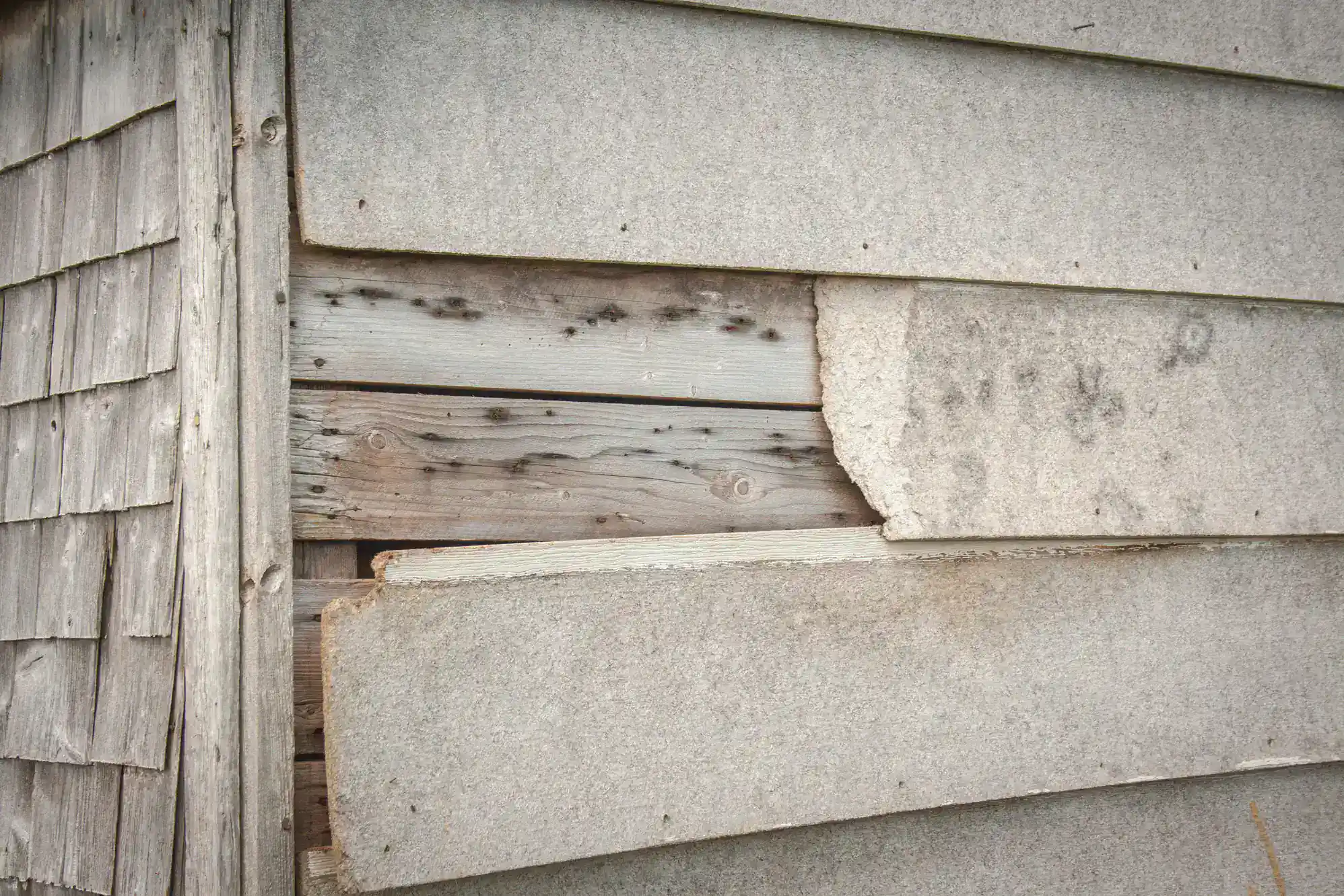
San Diego’s Mediterranean climate is essentially a high-tech laboratory designed to destroy house siding. The constant sunshine delivers a level of UV radiation that doesn’t just “dull” your paint; it literally breaks the chemical bonds of inferior materials. It’s like leaving your house in a giant tanning bed that never turns off.
Then there’s the salt air—the invisible corrosive “hitchhiker” that travels miles inland on the marine layer. This salty mist penetrates every pore of your siding, looking for metal fasteners or mesh to rust. By the time you see a brown streak on your stucco, the damage underneath is already advanced enough to buy a drink.
Finally, we have the “Daily Dance” of temperature swings. Your house expands in the 85-degree afternoon and contracts in the 55-degree foggy morning. This constant “yoga session” creates stress fractures in rigid materials and causes cheap plastics to pull away from their fasteners. If your siding isn’t flexible or engineered for this movement, it’s going to “retire” much earlier than you planned.
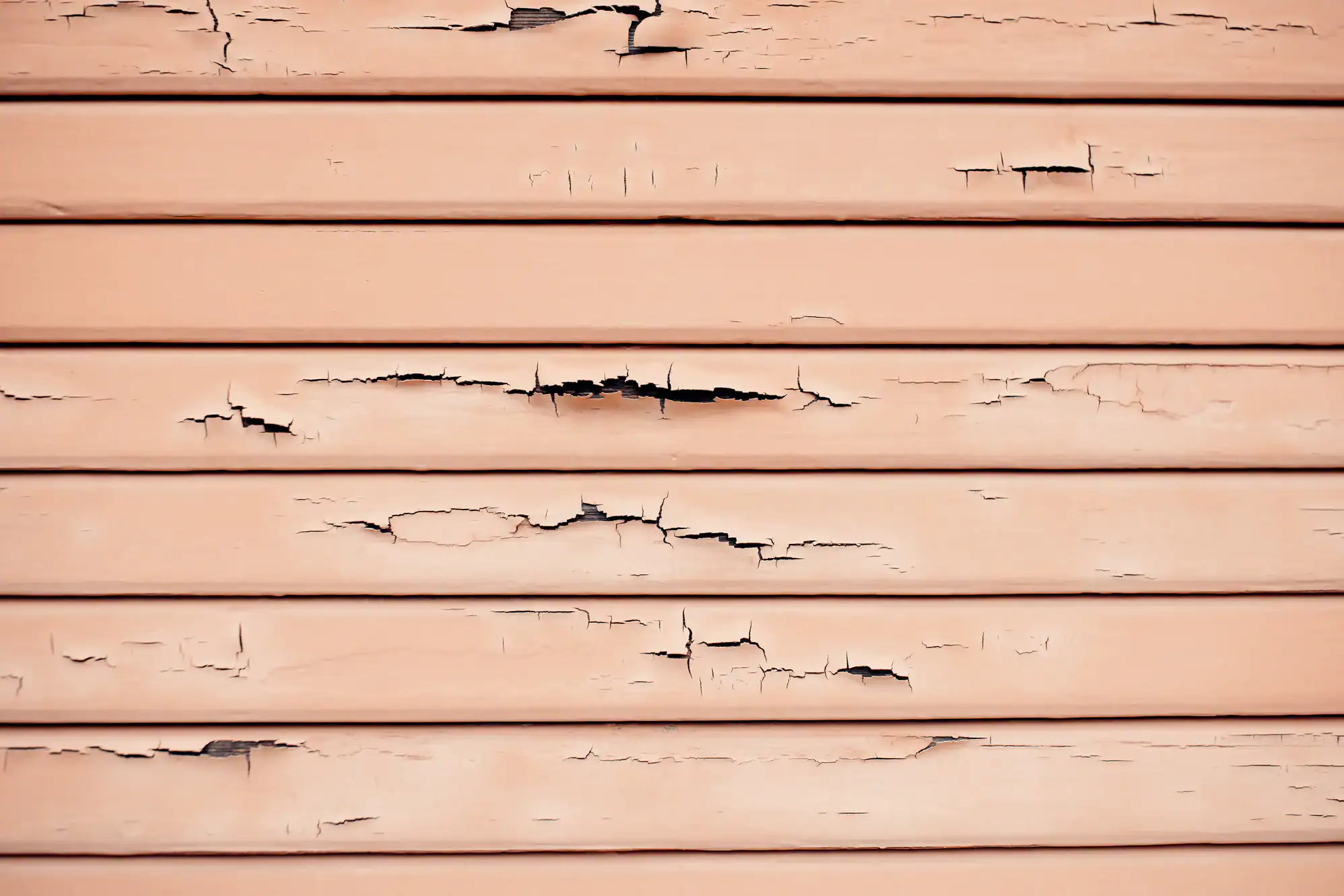
Vinyl siding is often sold as the “low-maintenance hero,” but in San Diego, it can quickly become the “high-anxiety villain.” Most standard vinyl has a heat distortion temperature of about 165°F. While that sounds high, the surface of a dark-colored house in El Cajon can hit that easily on a sunny July day. When it does, the vinyl doesn’t just get hot—it physically buckles and warps, giving your home all the structural integrity of a melted candle.
The UV rays also love to play “color thief” with vinyl. Since the pigment is often just on the surface, the sun bleaches it unevenly. Your south-facing wall will end up three shades lighter than the north side, leaving your home looking like a patchy DIY experiment gone wrong. And don’t get us started on “chalking,” where the plastic breaks down into a white powder that rubs off on your clothes every time you walk past.
If you must go with vinyl, you need the premium stuff with UV inhibitors and a high “heat-deflection” rating. Some modern composites can handle up to 200°F and use inorganic minerals to resist the fade. But for the average homeowner, standard vinyl in California is usually a recipe for a “re-do” within a decade, making that “affordable” price tag look a lot more expensive in the long run.
Stucco is the unofficial uniform of San Diego homes. It looks great with a palm tree, provides decent insulation, and handles our dry spells like a champ. However, stucco is essentially a rigid rock shell wrapped around a wooden box that wants to move. When the house shifts or the temperature swings, the stucco doesn’t “stretch”—it snaps.
Those tiny “spiderweb” cracks you see near your windows aren’t just for decoration; they are VIP entrances for moisture. In coastal areas, that morning fog seeps into those cracks and sits there, slowly rotting the wood framing behind the scenes. If you don’t use high-quality elastomeric sealers (which are basically like putting a giant, breathable rubber band around your house), your stucco will eventually develop a “crusty” personality.
The pro move for stucco in the 2020s is “integrated pigment.” Instead of just painting the surface, the color is mixed directly into the final coat. This means when your kid hits the house with a surfboard, the chip is the same color as the wall. It stops the endless 5-year repaint cycle and keeps your home looking fresh even when the Pacific air is doing its worst.
Want live answers?
Connect with a MRH Pro Construction & Painting expert for fast, friendly support.
In 2026, the smart money in San Diego exterior remodeling is on materials that can take a punch. We’re moving away from “cheap and cheerful” toward “tough and timeless.” Your home’s exterior is its first line of defense, and in a county that deals with everything from salt spray to wildfire risks, you need a material that doesn’t just look pretty on a brochure.
The “Best in Show” for our region is almost always fiber cement. It’s the “Goldilocks” of siding: it’s not as brittle as old-school stucco, it won’t melt like vinyl, and it laughs at the termites that think your wood siding is a five-star buffet. Regardless of if you’re near the beach in Del Mar or up in the hills of Escondido, these modern materials are engineered for our specific “HardieZones.”
Choosing the right material is 50% of the battle; the other 50% is finding a contractor who doesn’t treat “manufacturer instructions” like a suggestion. Siding in San Diego needs proper flashing and moisture barriers because when it rains here, it really means business. Let’s look at why one brand in particular has taken over the San Diego skyline.
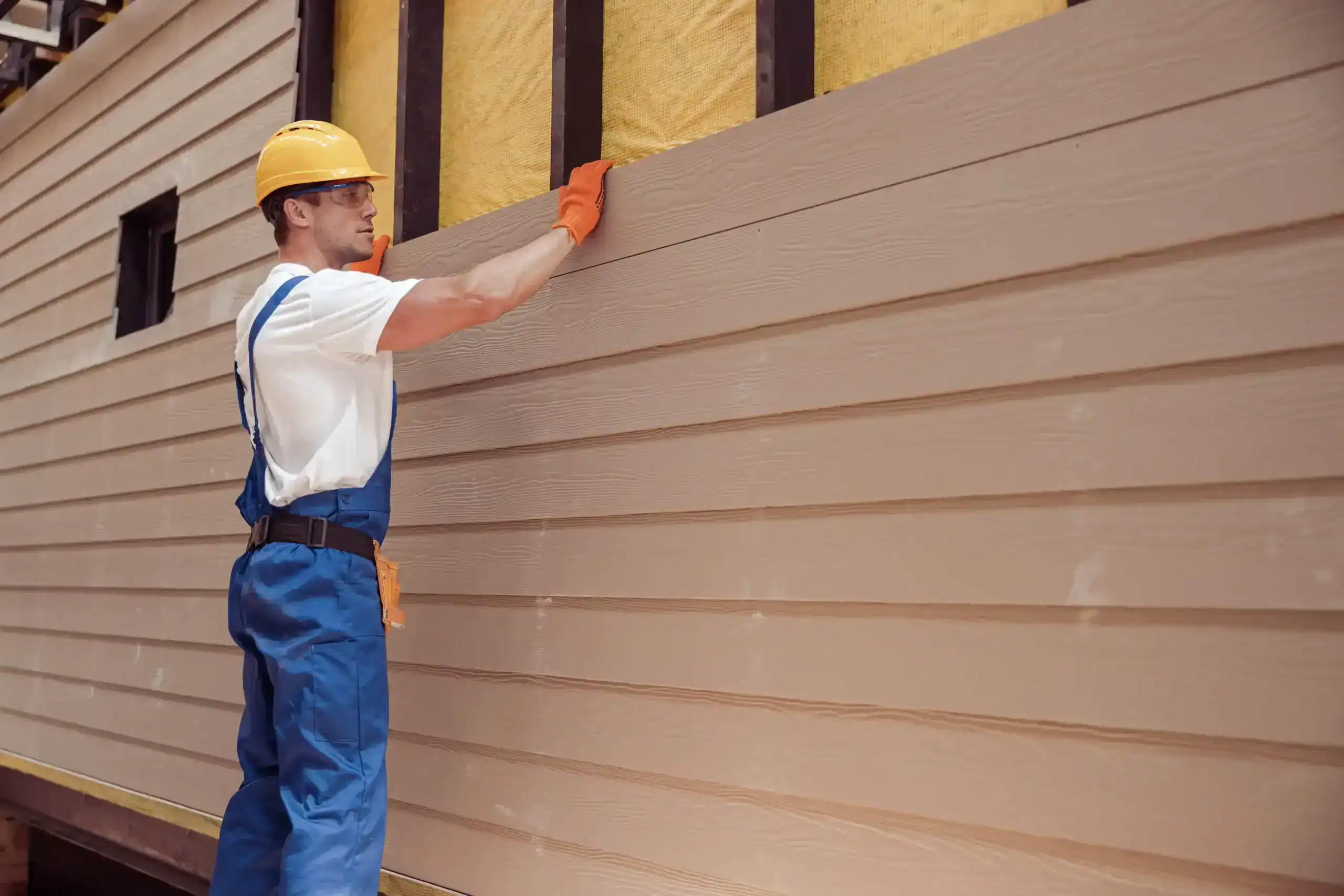
James Hardie siding has become the go-to for a reason: it’s basically bulletproof (not literally, please don’t test that). Made from a mix of cement, sand, and cellulose fibers, it has the “dimensional stability” that vinyl lacks. This means it doesn’t shrink, swell, or warp when the Santa Ana winds kick in. In San Diego, we specifically use the HZ10 formulation, which is the “special ops” version of siding designed for high UV and coastal humidity.
Fire resistance is another reason this stuff is dominating the California market. Fiber cement is non-combustible with a Class A fire rating. In a state where “Fire Season” is a legitimate part of the calendar, having a house wrapped in a material that won’t ignite is a huge win for your peace of mind (and potentially your insurance premiums). It’s like giving your house a suit of armor that happens to look like high-end wood.
The “ColorPlus” technology is the cherry on top. Instead of a guy with a spray gun doing his best in your driveway, the color is baked on at the factory. This creates a bond that resists the San Diego “UV bleach” for 15 years or more. It’s the closest thing you can get to a “set it and forget it” exterior. Yes, it costs more upfront than vinyl, but when you’re still not repainting in 2040, you’ll be glad you spent the extra cash.
Finding a siding contractor in San Diego shouldn’t feel like a blind date with a con artist. The first thing to check is their license—you’re looking for a B-General or a C-33. If they tell you they “don’t need one” for a job this size, they are lying faster than a politician. A valid license means they have a bond and workers’ comp, which protects you from becoming the legal “employer” of a guy who falls off a ladder.
Ask about their “Crew DNA.” Many big companies are actually just sales offices that “sub” everything out to the cheapest guys they can find on a Tuesday morning. You want a company with a direct, in-house crew. Direct crews mean consistent quality, better communication, and someone to actually hold accountable if your windows aren’t flashed correctly. If the contractor can’t tell you the names of the guys who will be on your roof, keep looking.
Lastly, look at their local track record. A contractor from out of town might not realize that stucco in Point Loma needs different prep than siding in Borrego Springs. You want someone with at least a decade of San Diego “dirt” under their fingernails. Check their reviews, ask for local addresses you can drive by, and ensure they handle all the city permits. If they ask you to pull the permit, that’s a red flag the size of a stadium.
At the end of the day, your San Diego home is likely your biggest asset, and its siding is the only thing keeping the Pacific elements from moving into your living room. Choosing UV-resistant materials like fiber cement or high-grade pigmented stucco isn’t just about “keeping up with the Joneses”—it’s about protecting your equity. A cheap siding job is the most expensive thing you can buy.
Don’t let the sun win the war. By choosing materials engineered for the “HardieZone” and a contractor who uses direct, licensed crews, you ensure your home stays beautiful and thermally efficient for decades. Plus, you’ll have the best-looking house on the block, which is a pretty nice bonus when it’s time to host the summer BBQ.
At MRH Pro Construction & Painting, we’ve spent 16 years perfecting the art of the “San Diego Exterior.” We know the sun, we know the salt, and we never use subcontractors.
Article details:
Share:
Continue learning: