Your exterior paint shouldn't flake after one summer. Discover what San Diego painting contractors know about surface prep and heat-resistant techniques.
Share:
Summary:
Walk through any San Diego neighborhood and you’ll spot them: homes with paint that’s chalking, cracking, or peeling away from stucco and siding like a bad sunburn after a weekend at Mission Beach. It’s not random, and it’s not just “old age.” Paint is essentially a flexible skin, and when that skin loses its grip, the results aren’t pretty.
In San Diego County, paint failure happens faster than almost anywhere else because our environment is a triple threat. You have the year-round UV bombardment, the temperature “mood swings” between morning marine layer fog and afternoon desert heat, and the corrosive salt air that thinks your trim is an all-you-can-eat buffet. These factors work together to turn your beautiful finish into a brittle mess.
Most paint jobs are sold on the “glamour” of the paint itself—fancy brands and promises of “lifetime” durability. But even the most space-age, titanium-infused paint in the world won’t stick to a surface that wasn’t properly prepared. That’s the secret most painting contractors San Diego won’t tell you: the most important part of the job is the part you never actually see.

San Diego doesn’t have the “polar vortex” of the East Coast, but we have something worse for exterior paint—a sun that never takes a vacation. UV rays are essentially microscopic jackhammers that hit your south and west-facing walls every single day. They don’t just fade the color; they break down the chemical binders that hold the paint to your house.
When temperatures climb above 90°F—which is basically a Tuesday in El Cajon—paint can dry too fast during application. If the surface is sizzling, the paint cures before it can actually “bite” into the stucco or wood. You end up with a film that looks fine for six months but has the structural integrity of a sticky note. The first cool breeze or damp morning starts the peeling process.
Dark and mid-tone colors are the biggest drama queens in this scenario. They absorb more heat, which makes your walls expand and contract like they’re trying to do yoga. Each cycle weakens the paint’s grip. Coastal properties have it even harder; salt air finds its way into microscopic pores in the paint and breaks the bond from the inside out. It’s essentially a chemistry experiment gone wrong.
Peeling paint actually tells a story, though it’s usually a tragedy. When you see paint coming off in giant sheets, it means moisture got behind the film—likely through a crack or a bad caulk joint. When you see “chalking” (that white dust on your hand), it means the UV rays have officially won the war. Cracking in a spiderweb pattern? That’s a sign the paint was applied too thick by a contractor who was in a hurry to get home for the game.
Moisture is the ultimate assassin here. In San Diego, it attacks from three sides: coastal fog, over-enthusiastic sprinkler systems, and interior humidity from your own bathroom. If your paint isn’t “breathable,” that moisture gets trapped against the wall. When the sun heats the wall up, that water turns into vapor and tries to punch its way out, creating the bubbles you see before the “Great Peeling.”
Stucco is particularly tricky because it’s porous—it breathes like a living thing. If a painting contractor doesn’t clean, repair “spider cracks,” and prime it correctly, the paint bonds to dust and old, powdery residue instead of the solid wall. It’s like trying to put a band-aid on a dusty knee; it might stay for a minute, but as soon as you move, it’s gone.
Want live answers?
Connect with a MRH Pro Construction & Painting expert for fast, friendly support.
Surface prep is the “boring” part of the job that determines whether you’ll be repainting in two years or twelve. It’s labor-intensive, incredibly dusty, and totally invisible once the final coat is on. This is exactly why low-bid contractors skip it—they know you can’t tell the difference on day one. You only see the “cheap” in a cheap job when the flakes start falling.
Real prep starts with a “detective phase.” A pro contractor doesn’t just walk around the house; they poke, prod, and inspect every square inch for moisture intrusion and failed caulking. We look for the “rot” before we look for the “beauty.” If we find a problem, we fix it with real repairs, not just a “lick of paint” to hide the evidence.
Cleaning is the next non-negotiable step. Power washing removes the grime, but it requires a delicate touch. Blast it too hard, and you’re injecting water into your walls; too soft, and you’re just giving the dirt a light rinse. The surface then needs to dry completely—usually 48 hours—before any primer touches it. If you see a crew washing and painting on the same day, grab your checkbook and run.

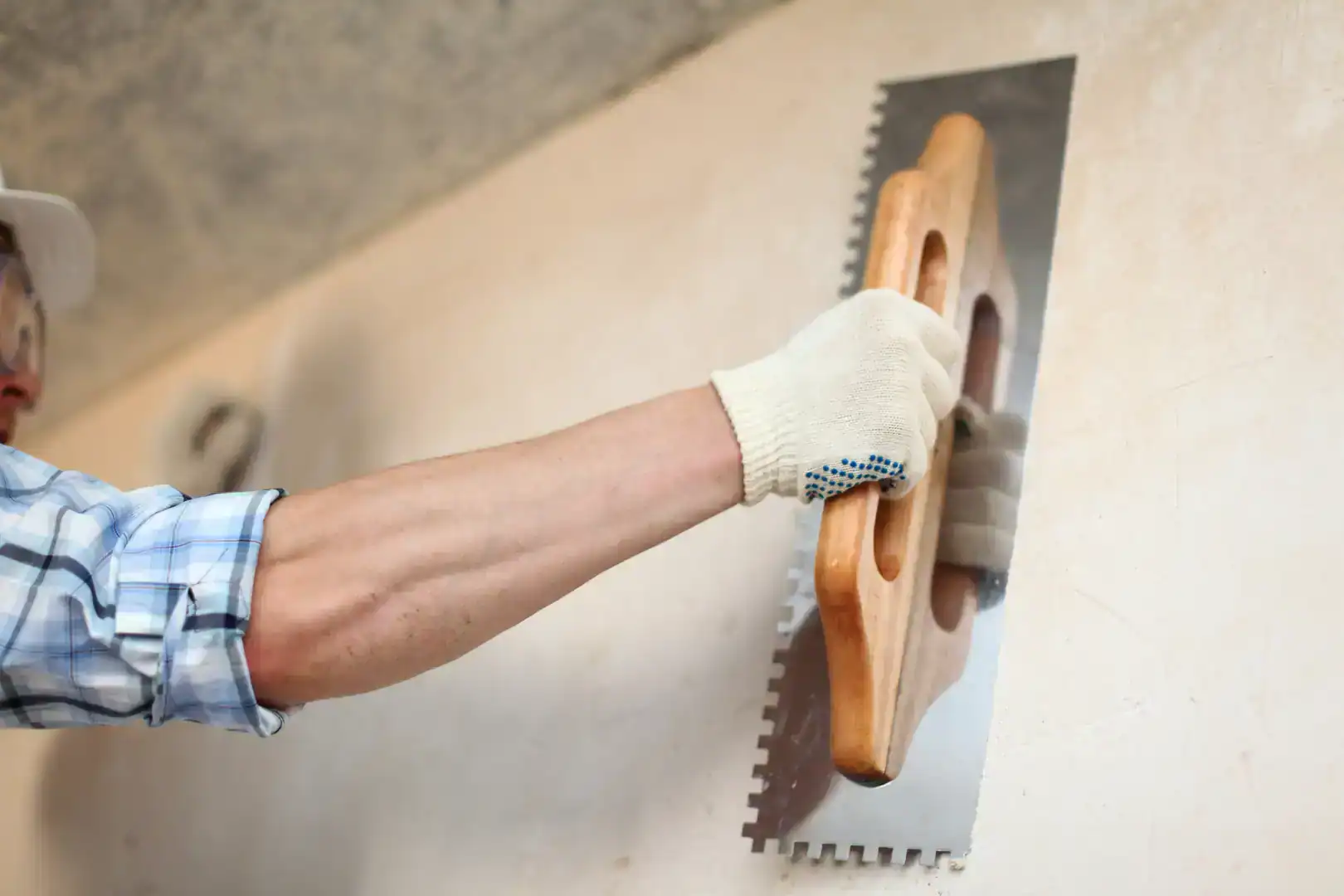
After the wash, the real elbow grease begins. Failing paint has to be scraped until you reach a solid edge, and those “ridges” where the paint meets the bare wall have to be sanded smooth. If you skip the sanding, your house will look like a topographical map, and those sharp edges will become the starting point for the next round of peeling. It’s tedious work, but it’s the only way to get a smooth, durable finish.
Then come the repairs. Cracks in stucco need high-quality patching compounds, and ratted wood trim needs to be replaced entirely—not just filled with “wood-flavored” putty. Every gap between your trim and siding needs a fresh bead of high-performance, paintable caulk. This creates a watertight seal that keeps the “bubbles” away and ensures your paint job doesn’t have an expiration date.
Finally, there’s the “P-word”: Primer. Bare wood and new stucco patches aren’t optional; they must be primed with a product designed to grip that specific material. Primer is the “glue” that makes the expensive topcoat stay where you put it. Skipping primer to save $200 on a $5,000 job is the definition of “penny wise and pound foolish,” yet it happens every single day in San Diego.
You don’t need to be a master painter to know if your crew is cutting corners. Use the “Day One Test”: if they show up and immediately start rolling color onto the walls, you’ve got a problem. A quality paint job should involve at least as much time preparing the surface as actually painting it. If the scraping and sanding phase feels like it’s taking forever, that’s actually a very good sign.
Look for the “Primer Ghost.” Before your house becomes that beautiful new shade of blue or taupe, it should look like a patchwork quilt of white primer spots. You should see fresh, smooth beads of caulk around every window and door frame. If the crew is “hiding” the prep work under the finish coat before you can see it, they are likely hiding a lack of prep work altogether.
Lastly, check the thermometer. Professional contractors check surface temperatures because painting a wall that’s 100°F is a recipe for instant flaking. If they are out there at 2:00 PM on a scorching August day painting the side of the house that’s in direct sunlight, they aren’t doing you any favors. A pro knows to “follow the shade” around the house to make sure the paint cures at a human pace.
Your home is likely your biggest investment, so why treat it with a “disposable” paint job? San Diego’s sun is a beast, but it’s a beast that can be tamed with the right preparation and the right contractor. You don’t have to accept a house that peels every two years; you just have to demand more than a “fast and cheap” solution.
When you’re ready to stop the flake, look for a contractor who talks more about “adhesion” and “sealant” than “colors” and “speed.” Ask for references from homes they painted five years ago, not five weeks ago. A true San Diego pro understands that the finish is only as good as the foundation, and they’ll take the time to do the job right the first time.
We’ve spent 16 years perfecting the art of the “San Diego Stick.” We know exactly what the local sun does to paint, and we know exactly how to fight back. If you’re tired of seeing your house shed its skin, let’s talk about a finish that actually lasts.
Article details:
Share:
Continue learning: