San Diego's sun and salt air are tough on stucco. This guide explains when to repair, when to replace, and what proper maintenance actually looks like in our climate.
Share:
Summary:
That crack in your stucco isn’t getting smaller. You’ve noticed the discoloration near the foundation, maybe some texture that feels softer than it should. Now you’re wondering if this is a weekend patch job or something that needs a professional stucco contractor in San Diego to fix properly.
Here’s the thing: San Diego’s climate is beautiful for living, but it’s brutal on exterior surfaces. The same sun and coastal air that make this place worth the cost of living also accelerate stucco deterioration faster than most homeowners expect. What works in other parts of the country doesn’t always apply here.
This guide walks you through what actually matters when you’re deciding between repair and re-stucco, why stucco dominates San Diego architecture, and what proper maintenance looks like in our specific climate.
Drive through any San Diego neighborhood and you’ll see stucco everywhere. It’s not just tradition—it’s practical.
Stucco thrives in our Mediterranean climate. The material resists fire, which matters in wildfire-prone areas. It provides natural insulation that keeps homes cooler during our long summers and retains warmth during mild winters. That thermal mass translates to lower energy bills year-round.
The Spanish and Mexican architectural influence runs deep here, dating back to early missions that brought stucco-building techniques to California. But the real reason it stuck around is performance. Stucco can last 50 to 100 years when properly installed and maintained. It resists pests, mold, and impact damage better than most siding options. The material buffers outside sound, which matters more as neighborhoods get denser.
Cost plays a role too. Stucco installation typically runs $8 to $18 per square foot in San Diego County, putting it in the same range as fiber cement siding but with lower long-term maintenance costs in our dry climate.
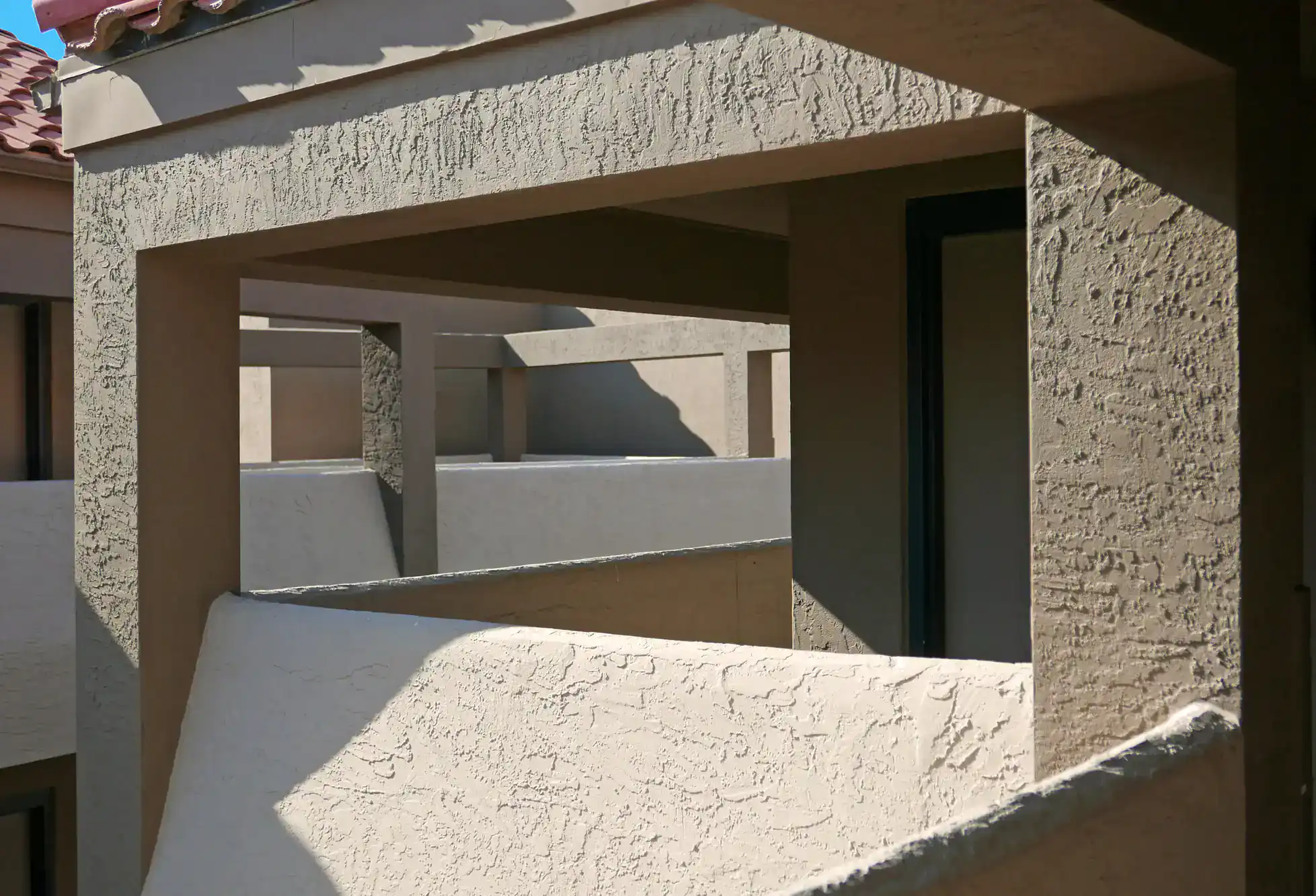
San Diego might have perfect weather for people, but it’s a different story for building materials. Your stucco faces challenges that properties in other regions don’t deal with.
UV exposure here is intense and year-round. Unlike areas with distinct seasons that give materials a break, San Diego sun beats down constantly. This UV radiation doesn’t just fade colors—it breaks down the molecular structure of paints and sealants. That’s why exterior paint and protective coatings need refreshing every 6 to 7 years here, compared to 10 years or more in other climates.
Coastal moisture adds another layer of complexity. If you’re within a few miles of the ocean, salt-saturated air actively attacks metal components within your stucco system. The metal lath behind the finish, the fasteners, the wire mesh—all of it faces accelerated corrosion. What looks like a small surface crack might hide rusting metal underneath that’s compromising your wall’s structural integrity.
Temperature fluctuations matter more than you’d think. San Diego experiences 30-degree temperature swings between foggy mornings and scorching afternoons. Materials expand when heated and contract when cooled. Do that cycle thousands of times over years, and you get stress cracks that create pathways for moisture.
Our winter rains, while brief, can be intense. When they hit, any weakness in your stucco system gets exposed. Water finds its way through cracks, behind improperly flashed windows, or past deteriorated caulking. Once moisture gets behind stucco, it can cause serious damage to wood framing, insulation, and interior walls before you even notice there’s a problem.
The combination of these factors means San Diego stucco requires more frequent attention than the same material would need in, say, Phoenix or Seattle. It’s not that stucco performs poorly here—it’s that our specific mix of sun, salt, and temperature variation demands proactive maintenance.
Maintenance isn’t glamorous, but it’s the difference between a $300 repair and a $15,000 re-stucco job. Here’s what actually matters in our climate.
Annual visual inspections should be standard. Walk around your property looking for cracks, water stains, or discoloration. Pay special attention to areas around windows and doors, at the foundation line, and on north-facing walls that don’t get enough sun to dry out quickly. Dark streaks or greenish-black patches aren’t just dirt—they’re signs of moisture that’s creating conditions for mold growth behind your finish.
Check your caulking and sealants. The intense San Diego UV means these materials need replacement every 3 to 5 years, not the 7 to 10 years you’d expect elsewhere. Dried, cracked caulk around windows and doors is an open invitation for water intrusion during our winter storms.
Cleaning matters more than most people realize. Gentle washing with mild detergent removes dirt, salt deposits, and organic growth before they cause problems. Don’t use high-pressure washers—they can force water behind the stucco or damage the finish texture. A soft brush and garden hose work fine for most situations.
Drainage systems need regular attention. Gutters and downspouts should direct water away from your foundation. Clogged gutters cause overflow that runs down stucco walls, creating exactly the moisture conditions that lead to deterioration. Make sure your landscaping doesn’t trap moisture against the stucco either. There should be at least 6 inches of clearance between soil and your stucco finish to prevent wicking.
Repainting serves a protective function, not just aesthetics. That paint layer shields the stucco from UV damage and provides a barrier against moisture. In San Diego’s climate, plan on repainting every 6 to 7 years. Waiting longer saves money in the short term but costs more when UV-damaged stucco needs repair instead of just fresh paint.
Professional inspections every 3 to 5 years catch problems early. Experienced contractors spot warning signs that homeowners typically miss—subtle bulging that indicates rusting lath, hollow sounds that reveal delamination, or early-stage efflorescence that signals water intrusion. These inspections cost a few hundred dollars but can save thousands by identifying issues before they become emergencies.
Want live answers?
Connect with a MRH Pro Construction & Painting expert for fast, friendly support.
This is the decision that either saves you money or costs you big if you get it wrong. The key is understanding what you’re really dealing with.
Repair makes sense when damage is localized and the underlying structure is sound. Small cracks from settling, minor impact damage, or surface-level deterioration in specific areas—these respond well to professional patching. In San Diego County, minor repairs typically cost $200 to $300 for issues like hairline cracks or small sections damaged by sprinkler systems.
Re-stucco becomes necessary when problems are widespread or when moisture has compromised the system behind the finish. If you’re seeing extensive cracking across multiple walls, bulging that indicates rusting lath, or repeated failures in the same areas despite repairs, you’re likely past the point where patching will solve anything.
The decision point comes down to what’s causing the damage and whether a surface fix will actually address it. A crack from a one-time settling event can be repaired. Widespread cracking from years of moisture intrusion behind the stucco requires tearing everything off and starting fresh.
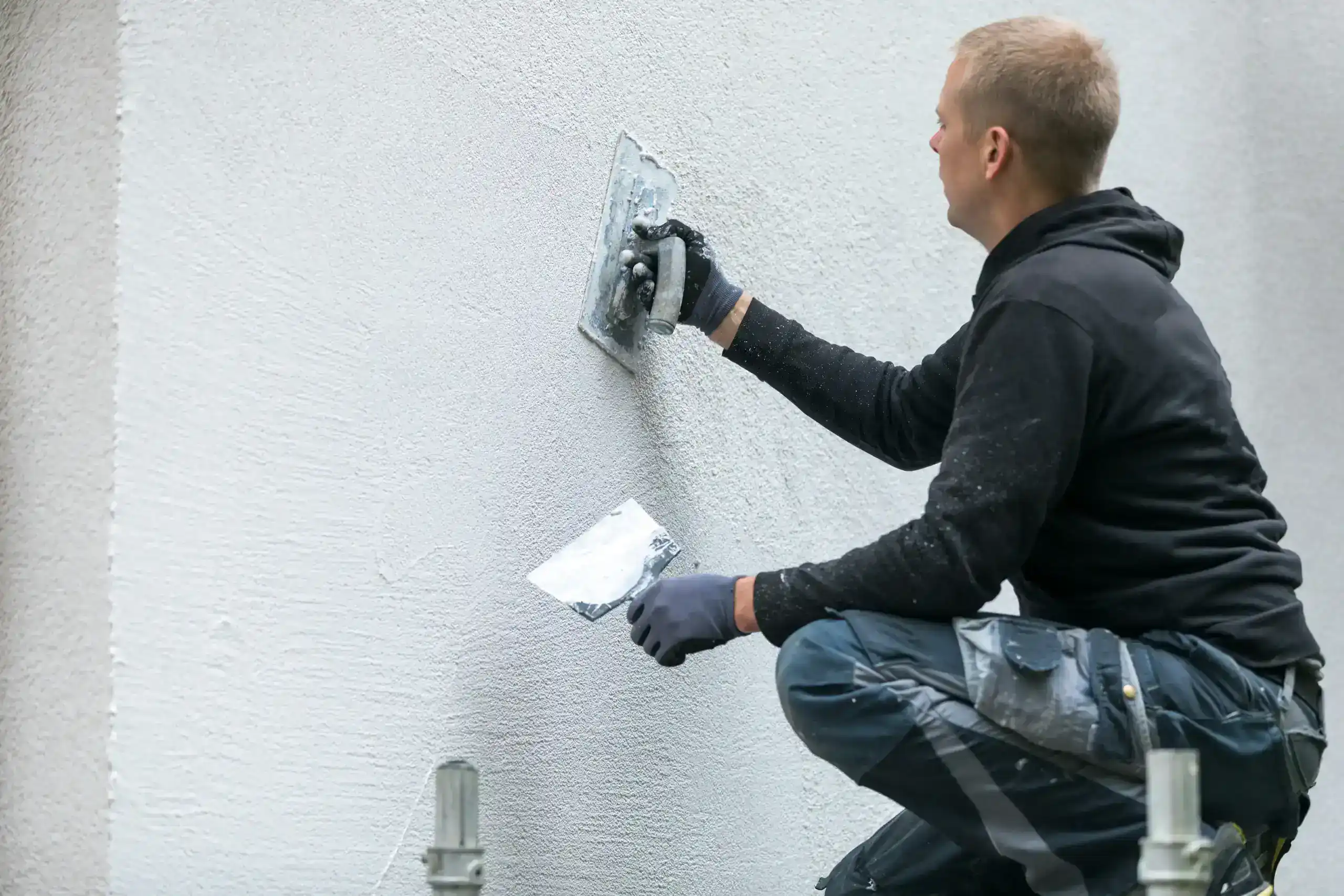
Certain problems respond well to targeted repairs. Here’s what to look for and what each issue actually means.
Hairline cracks less than 1/8 inch wide are usually cosmetic, especially if they’re limited to small areas. These often result from normal settling or minor thermal expansion. A professional stucco contractor in San Diego can seal these with elastomeric materials that flex with temperature changes, preventing them from widening.
Localized damage from specific incidents—like a ball hitting the wall, a ladder scraping the surface, or sprinkler water hitting the same spot for months—can be patched effectively. The key is that there’s a clear cause and the damage hasn’t spread. These repairs involve cutting back to sound material, matching the texture and color, and blending the patch so it disappears.
Surface-level deterioration in high-exposure areas sometimes just needs attention before it gets worse. If your south or west-facing walls show more wear from constant sun exposure, but the stucco itself is still structurally sound, repair with proper UV-resistant coatings can extend the life significantly.
Small sections of water damage, caught early, can be addressed without full replacement. If you notice discoloration or softening in a specific area and address it before moisture gets behind the stucco, repair prevents the problem from spreading. This is where annual inspections pay off—catching water intrusion at the surface level instead of after it’s rotted the wood framing.
The cost difference is substantial. Repairing isolated problems runs a few hundred dollars. Waiting until those problems spread and require full re-stucco can cost $10,000 to $15,000 or more for an average home. That’s why we emphasize early intervention for San Diego County properties.
Some situations are past the repair stage. Here’s how to recognize when you need complete re-stucco and why trying to patch your way out won’t work.
Widespread cracking across multiple walls indicates systemic problems. When cracks appear in patterns, spread across large areas, or keep coming back after repairs, the issue isn’t surface-level. You’re likely dealing with moisture that’s gotten behind the stucco and compromised the substrate, failed moisture barriers, or structural movement that’s affecting the entire installation.
Bulging or bubbling in the stucco surface is a red flag. This usually means the metal lath underneath is rusting and expanding, pushing the stucco outward. In coastal San Diego areas, salt air accelerates this corrosion. Once lath starts failing, there’s no fixing it without removing the stucco, replacing the corroded metal, and starting over.
Efflorescence—that white, powdery substance that appears on the surface—signals water intrusion. It’s minerals being dissolved by moisture and pushed to the surface as water evaporates. If you’re seeing efflorescence in multiple areas or it keeps coming back after cleaning, water is continuously getting into the system. Surface repairs won’t stop that.
Soft or crumbling stucco that deteriorates when you touch it has lost structural integrity. This happens when moisture has been present long enough to break down the cement binder. You can’t patch material that’s fundamentally compromised—it needs replacement.
Mold or mildew growth on the stucco surface, especially dark patches that won’t wash off, indicates persistent moisture problems. In San Diego’s relatively dry climate, if you’re seeing mold on exterior stucco, there’s significant water intrusion happening. That moisture is also affecting the wood framing and insulation behind the stucco.
Age combined with multiple issues changes the math. If your stucco is 40+ years old and you’re dealing with several problems simultaneously—cracking, water damage, failed paint, deteriorating caulk—the cost of addressing everything piecemeal often exceeds the cost of complete re-stucco. At that point, re-stucco gives you a fresh start with modern materials and techniques that will last another 50 years.
The investment in re-stucco ranges from $8,000 to $20,000+ depending on your home’s size and complexity. That’s substantial, but it includes new moisture barriers, proper flashing, updated drainage systems, and modern materials engineered for coastal climates. You’re not just getting a new finish—you’re getting a complete exterior protection system.
When you’re evaluating whether to repair or re-stucco, get a professional assessment from a licensed stucco contractor in San Diego County who understands local climate challenges. We can determine what’s happening behind the surface and give you an honest evaluation of whether repairs will actually solve your problem or just delay the inevitable.
Your stucco protects your biggest investment. Getting it right matters, and that starts with choosing contractors who understand what San Diego’s climate demands.
Look for licensed professionals with B General and C-33 credentials who have specific experience in coastal environments. Ask about their approach to moisture barriers, flashing details, and drainage systems—these details separate quality work from jobs that fail in a few years. References from recent projects in your area show they understand local conditions and building codes.
Transparent communication and detailed estimates prevent surprises. You should know exactly what work will be done, what materials will be used, and what the timeline looks like before any work starts. Contractors who pressure you into immediate decisions or can’t explain their process clearly are red flags.
We bring 16 years of exterior remodeling experience to San Diego County properties. Whether you’re dealing with minor repairs or need complete re-stucco, understanding your specific situation and providing honest recommendations is how we approach every project. Our team handles stucco, siding, windows, painting, and the carpentry work that ties it all together—keeping your exterior protected and your home looking its best in this challenging climate.
Article details:
Share:
Continue learning: