San Diego County's sun is relentless. Here's how to choose exterior paint colors that actually last — and look great doing it.
Share:
Summary:
Choosing exterior paint colors sounds simple until you’re standing in front of a wall of chips at the paint store, second-guessing everything. And in San Diego County, the stakes are higher than most people realize. The sun here doesn’t just fade color — it breaks down the paint film itself, especially on south and west-facing walls. Add in coastal salt air, June Gloom moisture, and the occasional Santa Ana wind, and you’ve got a climate that punishes the wrong choice fast. This guide walks you through what’s actually working in 2026, what to avoid, and how to make a decision you won’t regret two summers from now.
The cool gray wave that dominated the last decade is fading — and not just because of trends. Warm neutrals, earthy greens, and nature-inspired tones are taking over, and they happen to perform better in San Diego County’s sun than the stark whites and blue-grays that came before them.
What you’re seeing on homes across Escondido, Encinitas, and Rancho Bernardo right now is a shift toward colors that feel grounded and intentional — creamy oatmeal tones, muted sage greens, soft terracottas, and warm taupes that complement the landscape instead of fighting it. These aren’t bold statements. They’re colors that age well, photograph well, and hold their tone longer under intense UV exposure.
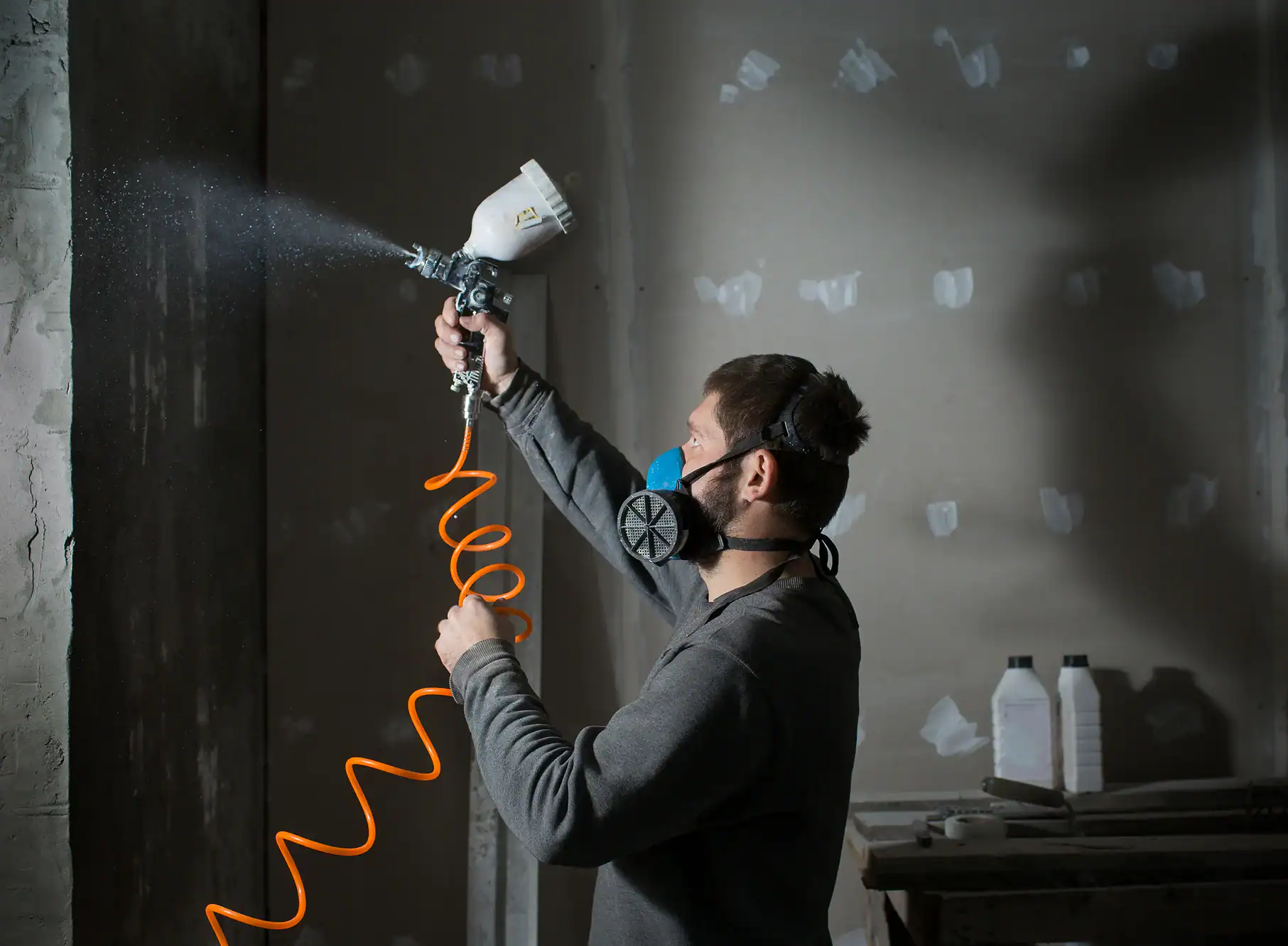
Here’s the honest answer: lighter, warmer tones outperform dark, saturated colors on fully exposed San Diego County exteriors. Deep navy, charcoal, and pure black look stunning in photos, but on a south-facing wall in Santee or El Cajon, they can start showing visible fade within three to five years. The pigments in dark colors absorb more UV radiation, which breaks them down faster. That doesn’t mean you can’t use them — it means you use them strategically, on protected surfaces, shaded overhangs, or as accent colors on doors and shutters where the exposure is lower.
For the main body of your home, warm neutrals are the most forgiving and the most durable. Think greige, soft khaki, warm cream, and sandy beige tones. These colors reflect more heat, hide imperfections better than stark white, and maintain their tone far longer under San Diego County’s sun. The “oatmeal and iron” pairing — a warm, creamy field color with deep, moody accents on trim and the front door — is one of the strongest looks emerging in 2026, and it works across nearly every architectural style in the county.
If you’re on or near the coast — Pacific Beach, Ocean Beach, Coronado, La Jolla — soft blues, seafoam greens, and warm grays still make sense. They complement the environment and tend to hold color better than the same shades would in hotter inland areas. Homes in Rancho Santa Fe or Fairbanks Ranch with Spanish Colonial architecture often do well with warm whites, clay tones, or dusty terracotta that echoes the tile rooflines. In North County communities like Carlsbad and Vista, earthy greens and muted browns are showing up more and more, particularly on newer construction.
The key isn’t chasing what’s trending on Pinterest. It’s choosing a color that works with your home’s architecture, your neighborhood’s character, and San Diego County’s specific climate demands — and then backing it with a paint formula that can actually handle what this region throws at it.
Color gets all the attention, but finish matters just as much — especially here. Flat paint absorbs moisture, which is a problem for homes west of the I-5 where the marine layer keeps surfaces damp most mornings. On coastal-facing walls, a flat finish traps salt air and humidity, which accelerates breakdown and encourages mildew growth on north-facing surfaces that don’t get direct afternoon sun.
For most San Diego County exteriors, satin or semi-gloss finishes are the better call. They’re easier to clean, more resistant to moisture and UV damage, and they hold color longer than flat sheens on sun-exposed surfaces. Flat finishes still have a place — they work well on protected soffits, interior-facing walls, or areas that don’t take direct sun — but they shouldn’t be your default for the whole house.
Beyond finish, the paint formula itself is where the real performance difference lives. Premium 100% acrylic latex paints are the standard for San Diego County exteriors because they’re flexible enough to handle the thermal expansion and contraction that happens when inland temperatures swing 30 to 40 degrees between night and day. They breathe, they bond well to stucco, and they resist UV breakdown better than oil-based alternatives. The ingredient that does most of the UV-blocking work is titanium dioxide — higher-quality paints contain significantly more of it, which is the main reason a $60 gallon of Sherwin-Williams Emerald or Benjamin Moore Aura outperforms a $30 budget option in this climate. For homes near the coast, look for a formula with built-in mildewcide. It’s a small detail that makes a real difference over time.
Want live answers?
Connect with a MRH Pro Construction & Painting expert for fast, friendly support.
A lot of homeowners assume painting is mostly about the paint. It’s not. The product matters, but the prep work is what determines how long the job actually lasts. A $60-per-gallon paint applied over a poorly prepared surface will fail faster than a mid-range product applied correctly over a clean, primed, properly repaired substrate.
This is where the difference between a quality painting contractor and a cheap one becomes visible — usually about two years after the job is done, when one home still looks fresh and the other is already chalking and peeling at the edges.
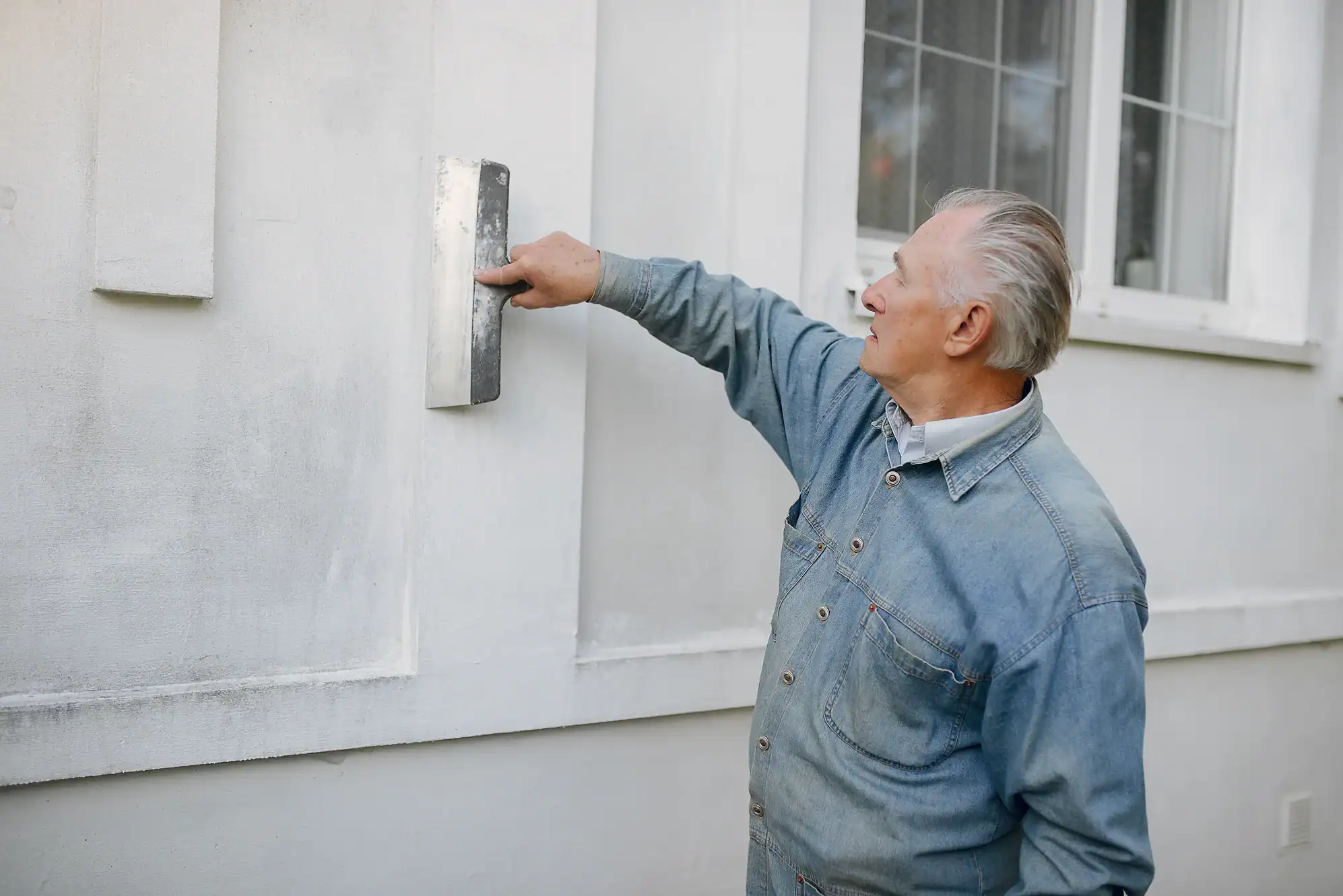
Proper exterior painting starts well before the first drop of paint goes on. The surface has to be clean, stable, and ready to accept a new coating — and in San Diego County, that means accounting for whatever the existing surface has been through: years of UV exposure, salt air deposits, stucco cracks from thermal movement, failed caulking around windows and doors, and in some cases, rotted wood behind trim or fascia boards.
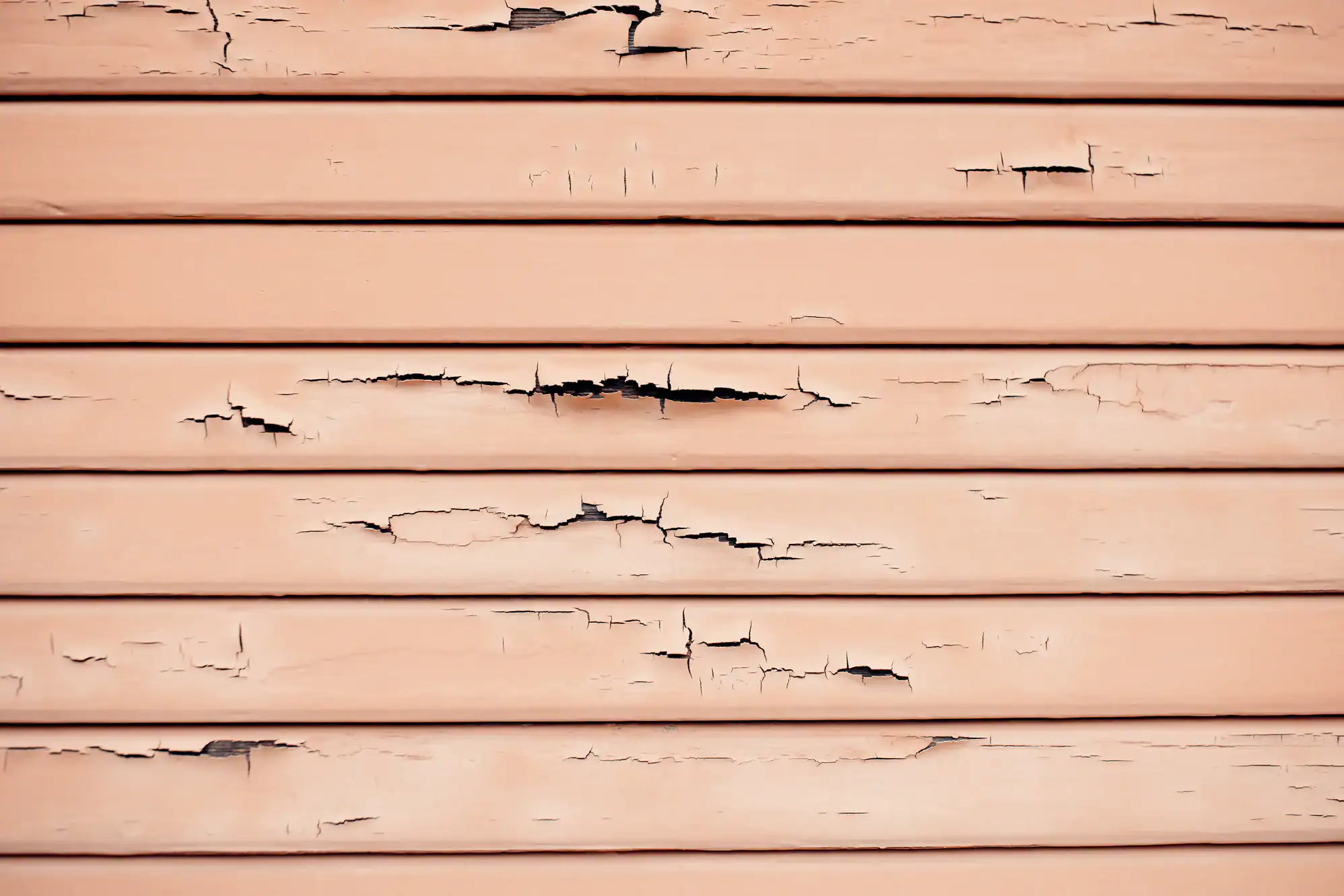
The prep process should include pressure washing the entire exterior to remove dirt, chalking, and salt deposits. After that, any loose or peeling paint needs to be scraped back to a stable surface. Cracks in stucco — even hairline ones — should be filled and allowed to cure before painting, because paint alone won’t bridge an active crack and it won’t stop water from getting in. Gaps around windows, doors, and penetrations need to be recaulked with a flexible, paintable sealant. Any rotted or damaged wood should be replaced before the paint goes on, not covered up.
Bare surfaces — whether raw wood, repaired stucco, or patched areas — need a bonding primer before the finish coat. Skipping primer on bare surfaces is one of the most common shortcuts that leads to peeling within the first year. Once the surface is properly prepared, a quality exterior job typically involves two coats of finish paint, with adequate dry time between coats. The result is a uniform, durable film that actually protects what’s underneath.
We’ve been doing this work in San Diego County for 16 years, and the jobs that hold up the longest are always the ones where the prep was done right. It’s not glamorous work, but it’s what separates a paint job that lasts seven years from one that needs attention in three.
In California, yes — and it’s worth understanding what that actually means before you hire anyone. Any painting job that costs $1,000 or more, including labor and materials, legally requires a contractor who holds either a C-33 Painting and Decorating license or a B General Contractor license issued by the California Contractors State License Board. This isn’t a technicality. It exists because painting involves surface preparation, primer application, coating selection, and in many cases, repairs to the substrate underneath — work that affects the structural integrity and weatherproofing of your home.
Unlicensed painters operate in San Diego County’s market, and they’re often cheaper. But if a worker is injured on your property and the contractor isn’t properly licensed and insured, the liability can fall on you as the homeowner. And if the work fails — whether from skipped prep, wrong products, or poor application — you have no meaningful recourse. A licensed contractor’s work is tied to a verifiable credential that can be checked at cslb.ca.gov at any time.
We hold both a B General Contractor license and a C-33 Painting and Decorating Contractor license. That combination matters for San Diego County homeowners specifically because exterior painting rarely exists in isolation. Stucco cracks need patching. Fascia boards rot. Window caulking fails. When a painting contractor discovers these issues mid-project, a painting-only license limits what they can legally do about it. With both licenses, we can handle the underlying repairs and the finish work under one contract, without bringing in a separate contractor or leaving problems unaddressed beneath a fresh coat of paint.
If you’re in a community with HOA requirements — Rancho Bernardo, Carmel Valley, or any of the master-planned neighborhoods in Chula Vista or Carlsbad — we can also help you navigate the color approval process, which is a step many homeowners don’t realize they need until after they’ve already chosen a color.
The color you choose matters. The finish matters. But the contractor you hire is what actually determines whether any of it holds up. San Diego County’s climate is genuinely demanding — the UV exposure, the coastal moisture, the temperature swings inland — and a paint job done without the right prep, the right products, and the right expertise will show it within a few years.
When you’re evaluating contractors, ask what specific paint products they use, what their prep process includes, and whether they hold a valid C-33 or B license you can verify. A contractor who can answer those questions clearly and specifically is one worth talking to further.
We’re based in Escondido and work throughout San Diego County. We offer free estimates, hold both B and C-33 licenses, use premium paint formulas matched to San Diego County’s climate, and do all work with our own crew — no subcontractors. Active military, veterans, and seniors receive a 10% discount. If you’re ready to talk through your project, reach out and we’ll take it from there.
Article details:
Share:
Continue learning: