Hiring the wrong addition remodeler can cost you far more than the project itself. Here's what actually separates the professionals from the problems.
Share:
Summary:
Hiring an addition remodeler sounds straightforward until you’re three weeks into a project and the crew hasn’t shown up in four days. Or the permit gets flagged because it was never pulled correctly. Or you find out the person who sold you the job handed it off to a subcontractor you’ve never met.
These aren’t rare horror stories — they’re common ones. And they almost always start the same way: a homeowner chose based on price without knowing what questions to ask first.
This page exists to change that. By the end, you’ll know exactly what separates a licensed, accountable addition remodeler from one who just says the right things during the estimate.
An addition remodeler isn’t just someone who builds a new room. The work touches your home’s structural integrity, its exterior envelope, its energy performance, and its resale value — all at once. That’s why the licensing requirements exist in the first place.
In California, any contractor performing work valued at $500 or more is legally required to hold a valid state contractor’s license. For addition-level projects, that typically means a Class B General Contractor license, which covers multi-trade work across framing, siding, windows, stucco, and more. Without it, the contractor is operating illegally — and you’re the one left holding the liability if something goes wrong.
The scope of a real addition project means you need someone who can coordinate across trades, manage permits, and make material decisions that hold up for years. That’s a different skill set than someone who’s good at one thing and figures out the rest as they go.
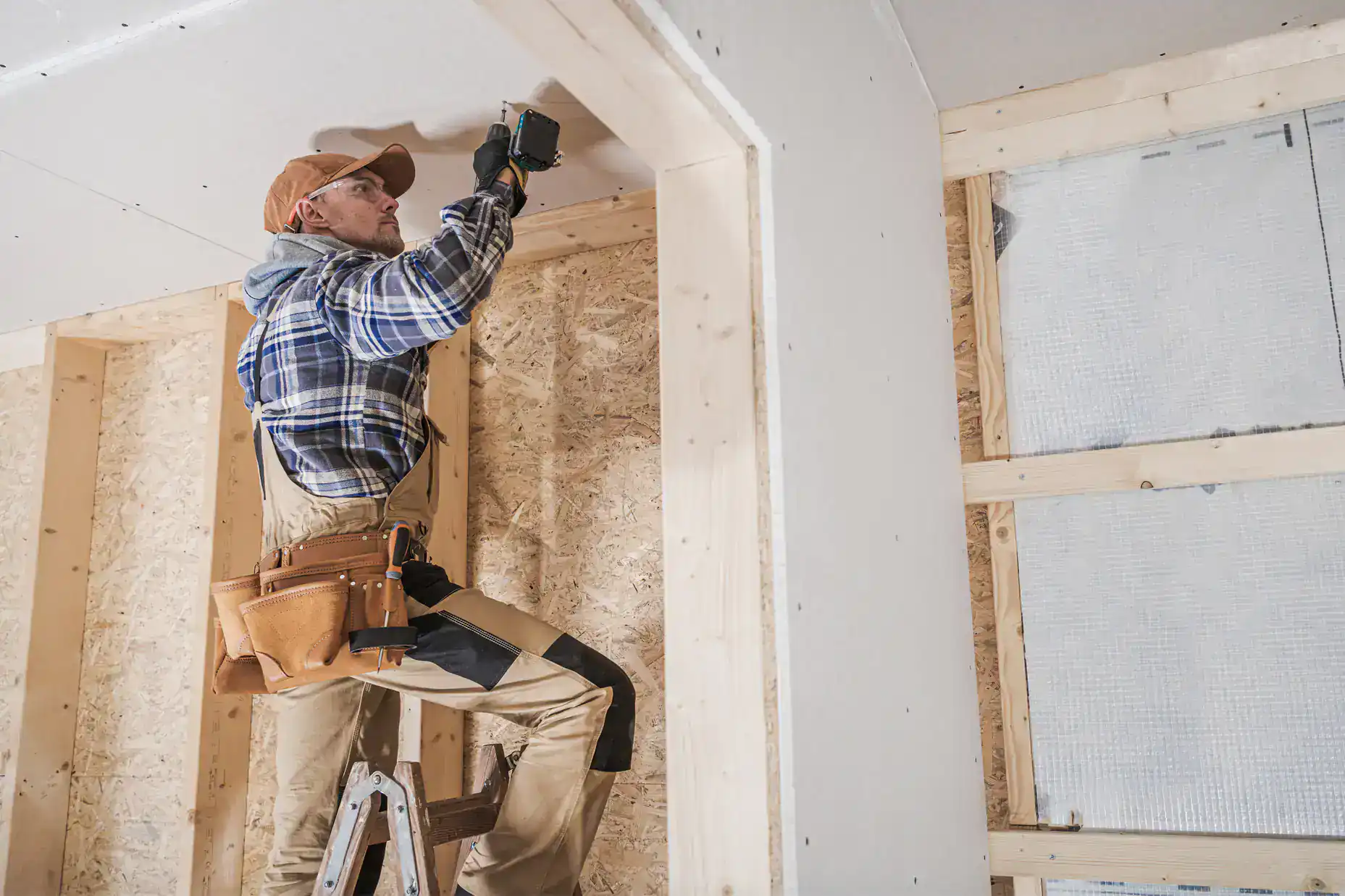
This is one of the most common questions homeowners ask before starting an addition project, and the answer depends heavily on the scope of work and who you hire.
For full structural additions — a second story, a major room expansion, a new attached garage — an architect or structural engineer may be involved at some stage, particularly for stamped drawings required by the county. But for exterior additions, reconfigurations, and large-scale exterior remodeling projects, a licensed general contractor with deep local experience can often handle the planning, permitting, and execution without a separate design firm in the mix.
This is what’s called a design-build approach, and it has real advantages. When the same team that designs the scope also builds it, you eliminate the communication gap that opens up between a separate architect and a separate contractor. Changes get made faster. The permit drawings reflect what will actually be built. And there’s one point of contact instead of two.
The key word in all of this is “licensed.” A contractor who holds a B General Contractor license has demonstrated multi-trade experience, passed a state exam, and is legally accountable for the work. That’s a different level of accountability than someone who calls themselves a home addition designer without credentials to back it up.
In San Diego County specifically, the permitting process runs through the Development Review Center, and projects that aren’t planned with that process in mind tend to stall. We know how to prepare drawings and documentation that move through review efficiently — which saves you weeks and avoids costly revisions. That local fluency is something you simply can’t get from a contractor who’s new to this market or working across too many regions to know the details.
If you’re exploring a home addition and wondering whether you need a designer, an architect, or a contractor — the honest answer is that a well-licensed, locally experienced general contractor is often the right starting point. We can tell you what the project actually requires, what the permit process looks like, and whether additional design professionals are needed for your specific scope.
Here’s something that doesn’t get talked about enough: most general contractors don’t do the work themselves. They coordinate it. They hire subcontractors — sometimes people they’ve worked with before, sometimes whoever’s available — and those subcontractors are the ones actually on your property.
That’s not inherently wrong. But it creates a chain of accountability that can break at any link. The subcontractor isn’t accountable to you — they’re accountable to the GC who hired them. If the quality isn’t right, or the timeline slips, or something gets damaged, you have no direct leverage over the person who actually did the work. You’re relying on the GC to care enough to fix it, and that’s a lot of trust to place in a relationship you can’t see.
We’ve spent years in the subcontracting world, and we know what it looks like when a GC is juggling five jobs and the sub crew on your project is the one that got deprioritized. That’s why we built our current model specifically to be the opposite of that.
Every project we take on is handled by our own seven-person crew — people we trained, people we trust, people who show up with full knowledge of the scope and a direct line to us if anything changes. There are no handoffs, no third-party crews, no strangers on your property who have no idea who you are or what you were promised.
For homeowners in San Diego County, this matters even more because the work itself is climate-specific. Coastal communities like Carlsbad, La Jolla, and Oceanside deal with salt air that degrades the wrong materials fast. Inland areas like Escondido, El Cajon, and Ramona face intense UV exposure and fire risk that require specific siding and coating choices. Our crew has worked exclusively in San Diego County for 16 years, so we know those distinctions the way a contractor working across a dozen different markets simply won’t.
The bottom line is that when you hire addition remodelers, you’re not just hiring a company name — you’re hiring the people who will actually be on your roof, your walls, and your property. You should know who those people are before work starts.
Want live answers?
Connect with a MRH Pro Construction & Painting expert for fast, friendly support.
A lot of homeowners see permits as a bureaucratic hassle — something contractors use to justify higher prices or slow down a timeline. But permits exist to protect you, not to complicate things.
When work is permitted, it gets inspected. That means a third party — the county — verifies that what was built meets California’s building codes. It means the work is on record. And it means that when you go to sell your home, there are no red flags in the permit history that force you to disclose unpermitted work or pay to have it removed and redone.
Unpermitted work can also void your homeowner’s insurance coverage for related damage. That’s a real financial risk that catches people off guard when they need coverage most.
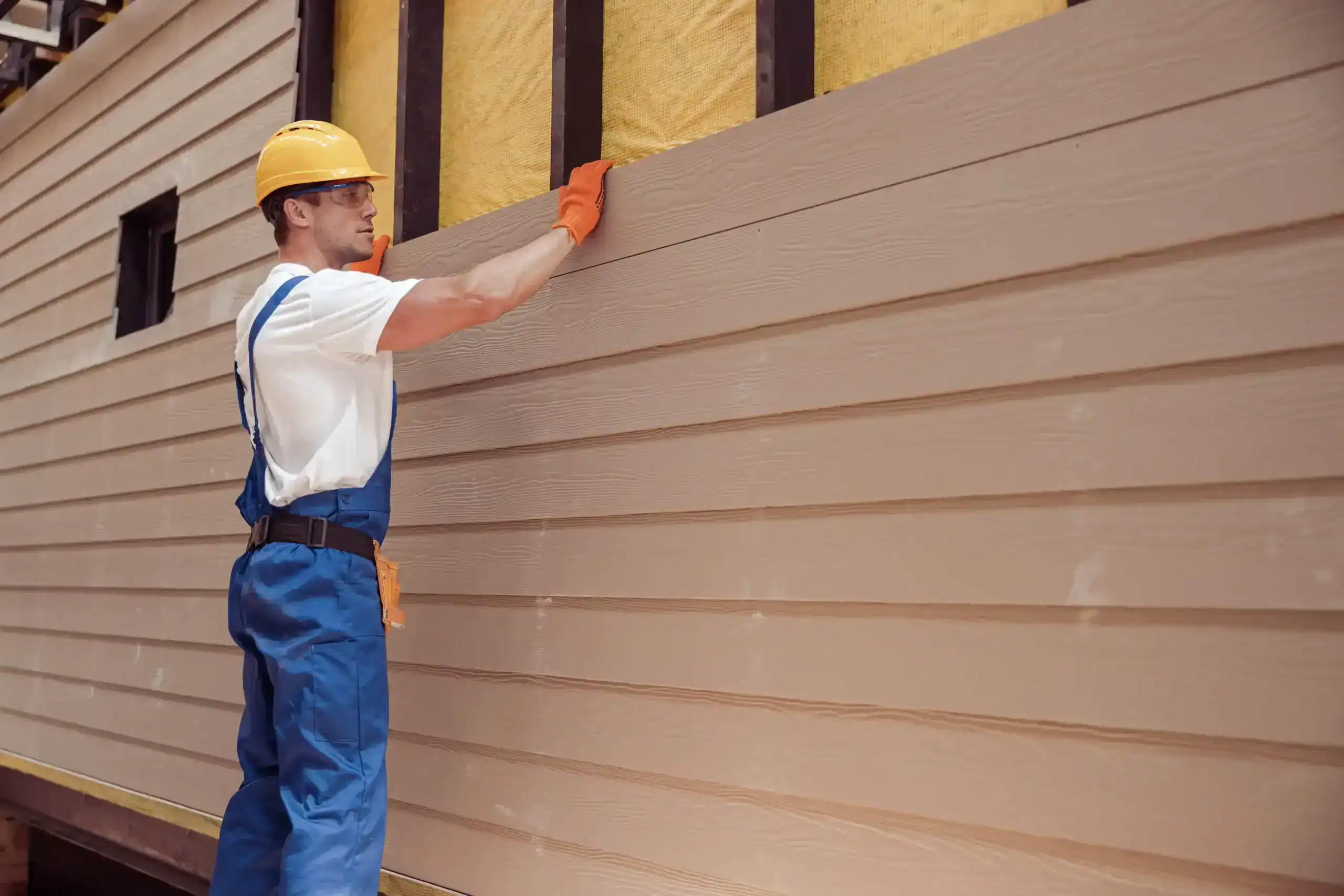
The short answer: almost certainly yes. In San Diego County, permits are required for the vast majority of exterior remodeling work — including siding replacement, window installation, stucco application, and any structural changes. The specific requirements vary depending on the scope of work and which city or jurisdiction you’re in, but assuming you don’t need a permit is a mistake that creates real problems down the line.
The permit process in San Diego County runs through the Development Review Center for unincorporated areas, and through the individual city building departments for incorporated cities like Escondido, El Cajon, Chula Vista, and Oceanside. Each has its own submission process, review timelines, and inspection requirements. If you’ve never navigated it before, it can feel overwhelming — which is exactly why it matters whether your contractor handles this or leaves it to you.
We handle the entire permit process for every project we take on. That means we prepare the documentation, submit the application, coordinate the inspections, and make sure everything is signed off before we consider a job complete. More importantly, we include permit costs in your estimate from the beginning. There are no surprise line items at the end of the project because we found out the permit fee was higher than expected. What you’re quoted is what you pay.
California also has Title 24 energy efficiency requirements that apply to window replacements and certain exterior upgrades. We know these requirements and specify compliant products. An unlicensed operator may not — which means you end up with a failed inspection, a required rework, and a contractor who’s no longer returning calls.
If a contractor tells you permits aren’t necessary for your project, or suggests doing the work “under the table” to save time, that’s a clear signal to walk away. It might save a few hundred dollars upfront. It can cost tens of thousands when you sell.
Most homeowners who’ve had a bad experience with a contractor say the same thing afterward: “The signs were there, I just didn’t know what I was looking at.” So here’s what to actually look for before you commit to anyone.
The first thing to check is the license. California’s Contractors State License Board maintains a public database at cslb.ca.gov where you can look up any contractor by name or license number and verify their status, license type, and whether there are any complaints or disciplinary actions on file. This takes about two minutes and tells you more than any sales pitch will. If a contractor can’t give you a license number, stop there.
Beyond licensing, pay attention to how a contractor talks about subcontractors. If they’re vague about who will actually be on your property, or if they say something like “we work with a network of trusted subs,” that’s worth pressing on. Ask directly: are the people doing the work your employees or third-party subcontractors? You deserve a straight answer.
Watch out for estimates that are significantly lower than others you’ve received. A low bid often means something is being left out — permit costs, material quality, or labor hours. Contractors who win on price and then add change orders throughout the project are a well-documented pattern in this industry. Ask every contractor you’re considering whether permit costs are included in the estimate, and get it in writing.
Timeline vagueness is another one. A contractor who gives you a start date but can’t tell you a realistic finish date is often juggling more projects than their crew can handle. Ask specifically: how many projects will your crew be working on simultaneously while mine is active? We work one project at a time. When your project is on the schedule, it gets our full attention — not a fraction of it.
Finally, look for local specificity. San Diego County has specific climate conditions, HOA requirements in many communities, and a permitting process that rewards contractors who know it well. A contractor who’s based here, has worked here for years, and can speak specifically to coastal vs. inland material differences is a fundamentally different hire than someone who just expanded into this market. That local knowledge shows up in the quality of the work, the accuracy of the timeline, and the smoothness of the permit process — and it’s worth asking about directly.
Licensing, crew accountability, permit transparency, and local experience — these aren’t premium features that only certain homeowners deserve. They’re the baseline of what a legitimate addition remodeler should offer. The problem is that the industry makes it easy to look legitimate without actually being it.
You now know what to verify, what questions to ask, and what answers should make you pause. That puts you in a much better position than most homeowners who start this process.
If you’re planning an exterior addition or remodel in San Diego County and want to talk through the scope, the timeline, and what it actually costs — including permits — we’re worth a conversation. Sixteen years in this market, a licensed crew, no subcontractors, and no surprises on the bill. That’s the standard we hold ourselves to on every job.
Article details:
Share:
Continue learning: