Not all siding holds up the same way in San Diego's sun, salt air, and fire-prone inland zones. Here's what to know before you commit.
Share:
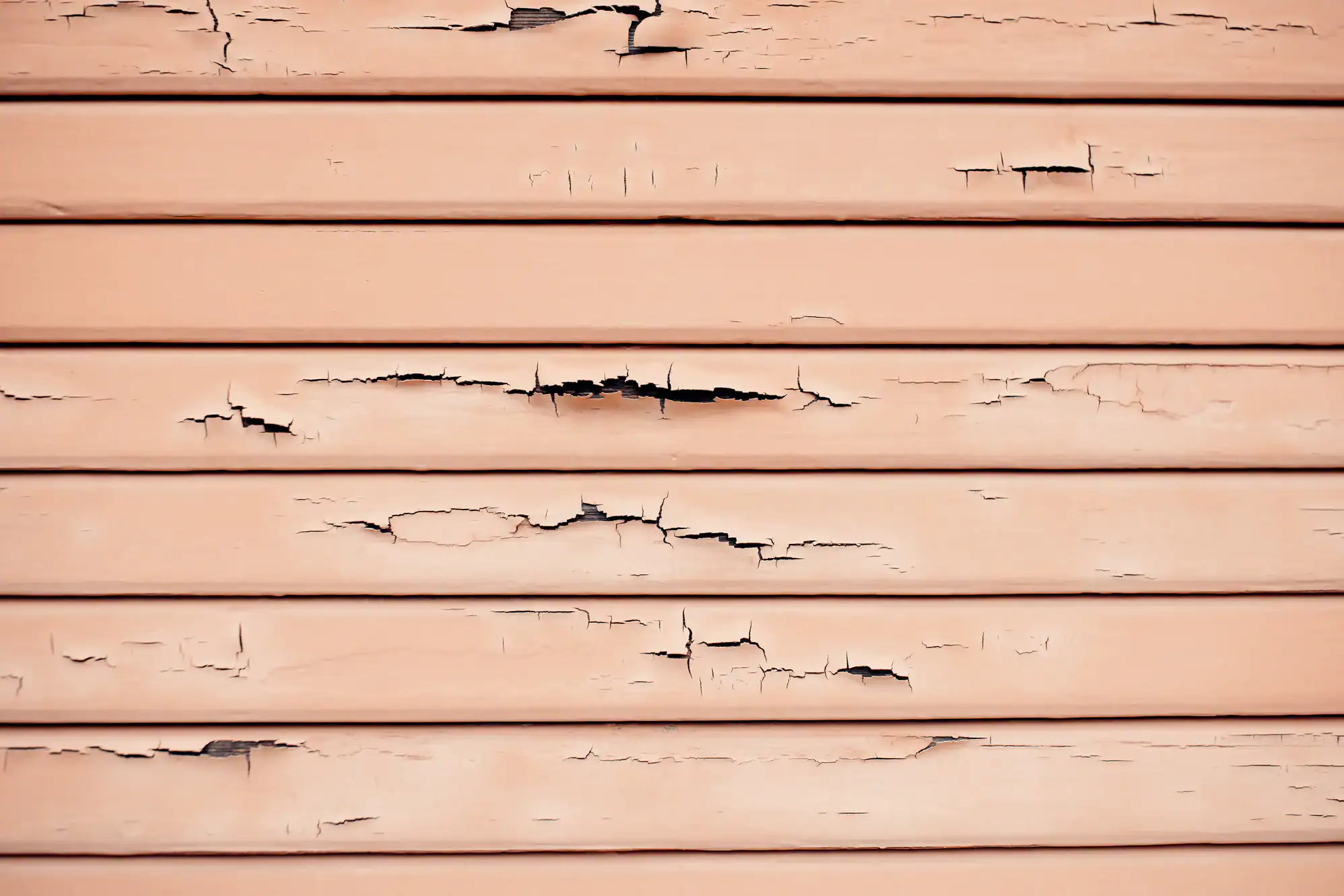
Summary:
If you’ve started looking into siding replacement, you’ve probably already noticed how hard it is to get a straight answer. Costs vary wildly. Contractors give vague timelines. And half the content online reads like it was written for someone in Minnesota, not San Diego County, where the sun is intense, the coast is close, and fire season is a real concern for inland neighborhoods.
This page is meant to cut through that. We’ll walk you through what siding replacement actually costs, how San Diego County’s climate should influence your material choice, and what questions to ask before you hire anyone — including us.
Nationally, siding replacement runs anywhere from $8,000 to $30,000 depending on the material, the size of the home, and local labor rates. For a typical 2,000 square foot home in San Diego County, mid-range siding lands around $17,200 installed — roughly $8.60 per square foot. Our local labor rates and the demand for coastal-rated materials can push costs toward the higher end of that range compared to other regions.
The biggest variable is the material itself. Vinyl sits at the low end, typically $4–$8 per square foot installed. Fiber cement — James Hardie being the most widely specified brand — runs $7–$18 per square foot, with most full projects averaging around $14,000–$15,000. Wood siding falls in a similar range to fiber cement but carries higher long-term maintenance costs. Stucco installation in San Diego County specifically runs $9.10–$18.20 per square foot for new application.
One cost most homeowners don’t budget for upfront: removing the old material. Tearing off and disposing of existing siding typically adds $1,000–$3,000 to the project total. If your home was built before 1980 and has never had the siding replaced, there’s a chance asbestos-containing materials are involved — which can triple removal costs. We flag this during the estimate, not after the work starts.
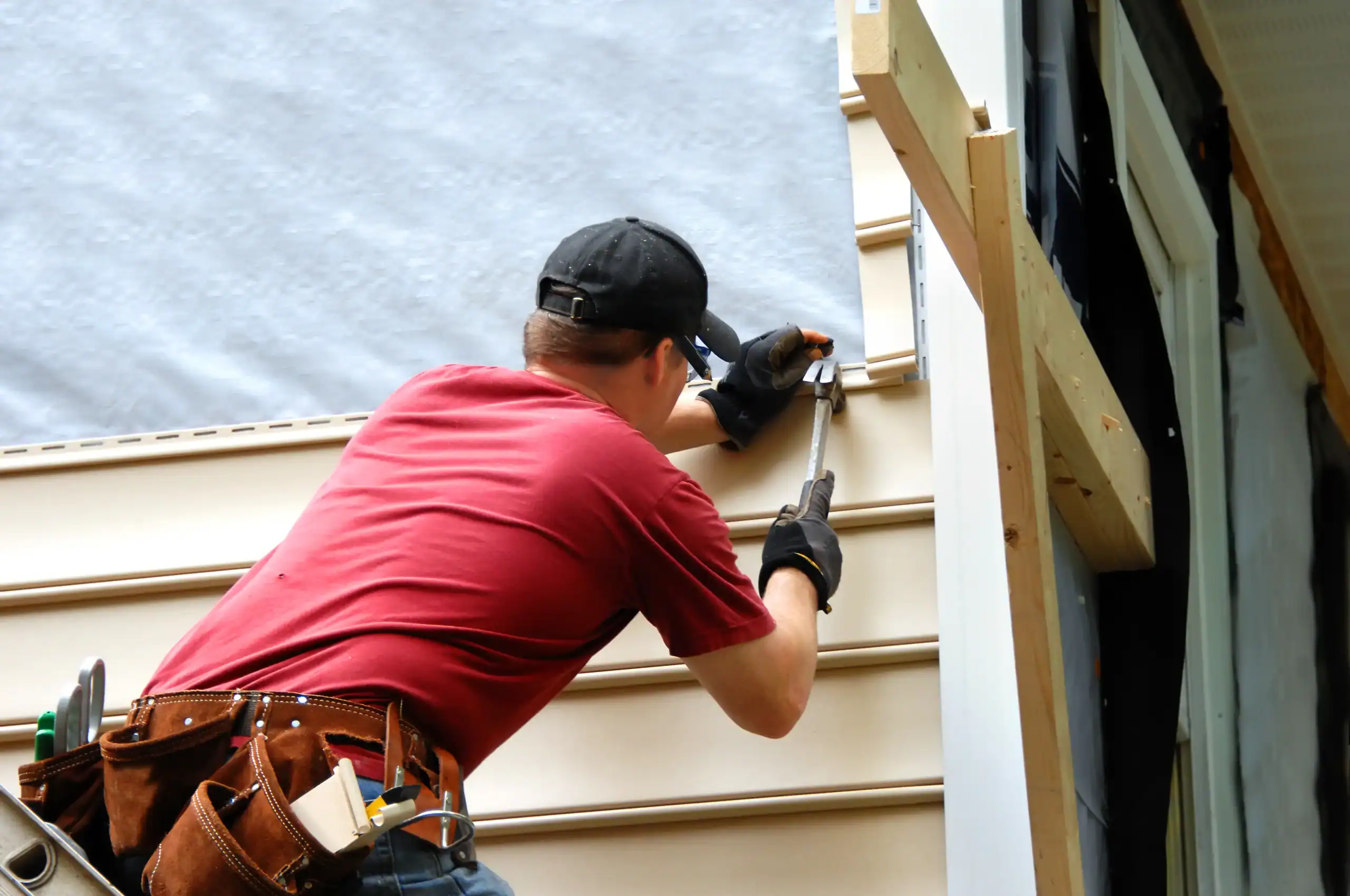
There’s a real difference between a contractor who installs siding as one of twenty services and one who focuses on it as a primary trade. Working with an experienced siding contractor San Diego homeowners trust can make a significant difference in installation quality, material recommendations, and long-term performance. It shows up in the quality of the work, yes — but it also shows up in the estimate.
Siding installation is highly material-specific. Vinyl has to hang loosely to allow for thermal expansion — nail it too tight and it buckles in the summer heat. Fiber cement is heavy, around 2.5 pounds per square foot, and requires specialized cutting equipment along with dust management protocols because of silica exposure risks. A contractor who primarily installs one material type and occasionally does another isn’t going to bring the same precision to both.
In San Diego County, this matters more than in most markets. The temperature swings between coastal communities like Encinitas and inland areas like El Cajon or Alpine are significant. A vinyl installation done without proper allowance for thermal movement in a hot inland climate is a problem waiting to happen. Fiber cement installed without the right flashing at windows and transitions is an invitation for moisture infiltration — which in coastal neighborhoods near Carlsbad or Oceanside, where marine layer is a near-daily reality, can cause serious damage behind the wall before you ever see it on the surface.
We’ve seen these failure modes firsthand. We know which materials hold up on south-facing walls in La Jolla, which ones the HOA in Rancho Bernardo will approve, and which formulations James Hardie makes specifically for California’s climate conditions. That’s not something you can replicate by reading the installation manual.
When you’re comparing estimates, it’s worth asking directly: how much of your business is siding, and what materials do you work with most? The answer tells you a lot about whether you’re talking to a specialist or a generalist who happens to do siding.
San Diego County averages 266 sunny days a year. That’s not a selling point for your siding — it’s a wear factor. South- and west-facing walls take a constant UV beating, and materials that aren’t specifically rated for high-UV environments will fade, crack, and degrade noticeably faster here than they would in, say, Seattle.
Then there’s the coast. Communities within a few miles of the Pacific — La Jolla, Del Mar, Pacific Beach, Encinitas, Carlsbad, Oceanside — deal with salt-laden marine layer on a near-daily basis. Salt air is corrosive to metal components and can work its way through improperly sealed siding systems, causing rot and mold behind the cladding long before it’s visible from the street. Proper flashing, a quality weather-resistant barrier behind the siding, and coastal-rated materials aren’t optional upgrades in these neighborhoods — they’re baseline requirements.
Inland San Diego County has a different set of concerns. Communities like El Cajon, Santee, Lakeside, Alpine, and Ramona sit in corridors that have seen some of California’s most destructive wildfires — the 2003 Cedar Fire, the 2007 Witch Creek Fire, the 2020 Valley Fire. For homeowners in these areas, the Class A fire rating that James Hardie fiber cement carries isn’t a marketing checkbox. It’s a meaningful safety consideration that also has real implications for homeowner’s insurance.
James Hardie manufactures a formulation specifically for California called HZ10, engineered for the combination of high UV exposure and coastal moisture that defines San Diego County’s climate. This isn’t the same product sold in the Midwest or the Southeast. When a contractor recommends Hardie board for a San Diego home, the follow-up question worth asking is whether they’re specifying the HZ10 formulation — or just ordering whatever’s available at the supply house.
One more thing that doesn’t get enough attention: termites. San Diego County has significant subterranean and drywood termite pressure. Wood siding is particularly vulnerable. Fiber cement and vinyl are both termite-resistant, which is a practical long-term advantage for homeowners who’ve already dealt with termite damage or live in areas with known activity.
Want live answers?
Connect with a MRH Pro Construction & Painting expert for fast, friendly support.
Most homes in San Diego County built between 1950 and 2000 are clad in traditional three-coat stucco. For decades, that was the right call — stucco handles the Mediterranean climate well, it’s durable when properly applied, and it’s aesthetically dominant in Southern California. But a lot of that housing stock is now 40 to 70 years old, and aging stucco has predictable problems.
Hairline cracks are normal and manageable. But when those cracks become recurring, when you’re patching the same spots every few years, or when water is getting behind the stucco and causing damage to the substrate, you’re at a decision point: repair it again, or replace it with something that won’t have the same failure modes going forward.

Converting from stucco to siding isn’t a simple overlay — it’s a structurally significant project that involves several distinct phases, and understanding the process helps you evaluate whether a contractor’s estimate is thorough or suspiciously thin.
The first step is removing the existing stucco. Depending on the condition of the material and the size of the home, stucco removal runs $1–$4 per square foot on average. Once the stucco is off, the substrate — the sheathing underneath — needs to be inspected carefully. This is where a lot of older San Diego County homes reveal problems that were hidden behind the stucco for years: rotted sheathing, moisture damage, pest activity. Any of that has to be addressed before new siding goes on, or you’re just covering up a problem that will get worse.
After substrate repairs, a new weather-resistant barrier goes on — this is the house wrap layer that protects the wall assembly from moisture infiltration. Then comes the siding installation itself, along with proper flashing at every window, door, and transition point. Flashing is one of those things that’s easy to do wrong and hard to see once the siding is up. It’s also one of the most common sources of water damage claims on exterior remodeling projects.
In San Diego County, fiber cement and stucco are priced similarly for full replacement — both typically running $8–$14 per square foot installed. So the cost argument for staying with stucco isn’t as strong as many homeowners assume. What fiber cement offers over stucco, particularly for aging housing stock, is lower long-term maintenance, termite resistance, a Class A fire rating, and a material that doesn’t crack with normal foundation movement the way stucco does.
That said, stucco isn’t always the wrong answer. If the existing stucco is in fundamentally good condition and the issues are limited to surface cracking, a proper repair and repaint may be the more cost-effective choice. The honest answer depends on what’s actually happening behind the surface — which is why a thorough inspection before any estimate is non-negotiable.
Yes — in most cases, siding replacement and stucco-to-siding conversion require a permit in San Diego County. This applies whether you’re in an incorporated city like Escondido, Chula Vista, or Carlsbad, or in an unincorporated area governed by the San Diego County Department of Planning and Development Services. The specific requirements vary slightly by jurisdiction, but the general rule is that any work affecting the building envelope — the outer shell that keeps weather out — requires a permit and inspection.
This matters for a few reasons that go beyond just following the rules. Unpermitted exterior work can complicate a home sale significantly. Buyers’ lenders often require permit verification for recent work, and if unpermitted work is discovered during escrow, you may be required to pull a retroactive permit, redo the work to current code, or both — at your expense, on your timeline. Homeowner’s insurance claims related to unpermitted work can also be denied.
Some contractors will suggest skipping the permit to save money or time. That’s a short-term convenience with long-term consequences, and it’s worth knowing that a licensed contractor who pulls permits is legally required to meet current building code — which protects you, not just the contractor.
We handle all permits and inspections for San Diego County projects, and permit costs are included in our estimates upfront. There are no surprise line items added after you’ve signed. This is one of those things that sounds like a small detail until you’ve dealt with a contractor who didn’t handle it properly.
One more thing specific to San Diego County: if your home is in an HOA-governed community — which covers a large portion of master-planned areas like Rancho Bernardo, Scripps Ranch, and parts of Chula Vista — exterior material and color changes typically require HOA approval in addition to a city or county permit. We’re familiar with these requirements and can help you navigate that process as part of the project.
The best siding companies aren’t the ones with the flashiest trucks or the lowest opening bid. They’re the ones who give you a detailed written estimate, pull their own permits, use direct employee crews, and can explain — specifically — why a given material is right for your home and your neighborhood.
In San Diego County, that last part matters more than most markets. The difference between a coastal La Jolla installation and an inland Alpine installation isn’t just geography — it’s UV load, fire risk, moisture exposure, and HOA requirements. A contractor who treats all of those the same isn’t paying close enough attention.
If you’re ready to get a straight answer about what your project will actually cost and what it will take to do it right, we’re based in Escondido and serve residential and commercial clients throughout San Diego County. We carry active B General Contractor and C33 licenses, use direct employee crews on every job, and offer a 10% discount for military members and senior citizens. Reach out and we’ll start with an honest conversation.
Article details:
Share:
Continue learning: