San Diego County's coastal climate is harder on exterior paint than most homeowners realize. Here is how to know when it is time to call a professional painting contractor.
Share:

Summary:
Most people do not think about their exterior paint until it looks bad. By then, the problem usually is not just cosmetic. In San Diego County, the climate works against your exterior finishes year-round: salt air off the coast, relentless UV, marine layer humidity through the summer, and Santa Ana winds in the fall and winter. That is a lot of stress on a painted surface, and it moves faster than you would expect. If you have noticed something off about your exterior lately and you are wondering if it is time to call a professional painting contractor, here is how to tell, and why waiting tends to cost more than acting now.
Paint does not fail all at once. It gives you signals first, and knowing what to look for is the difference between a straightforward repaint and a much more involved repair job. The tricky part in San Diego County is that some of these warning signs are easy to write off as normal aging when they are telling you something more serious is happening underneath the surface. Here are the five signs worth taking seriously, and what each one typically means for your property.
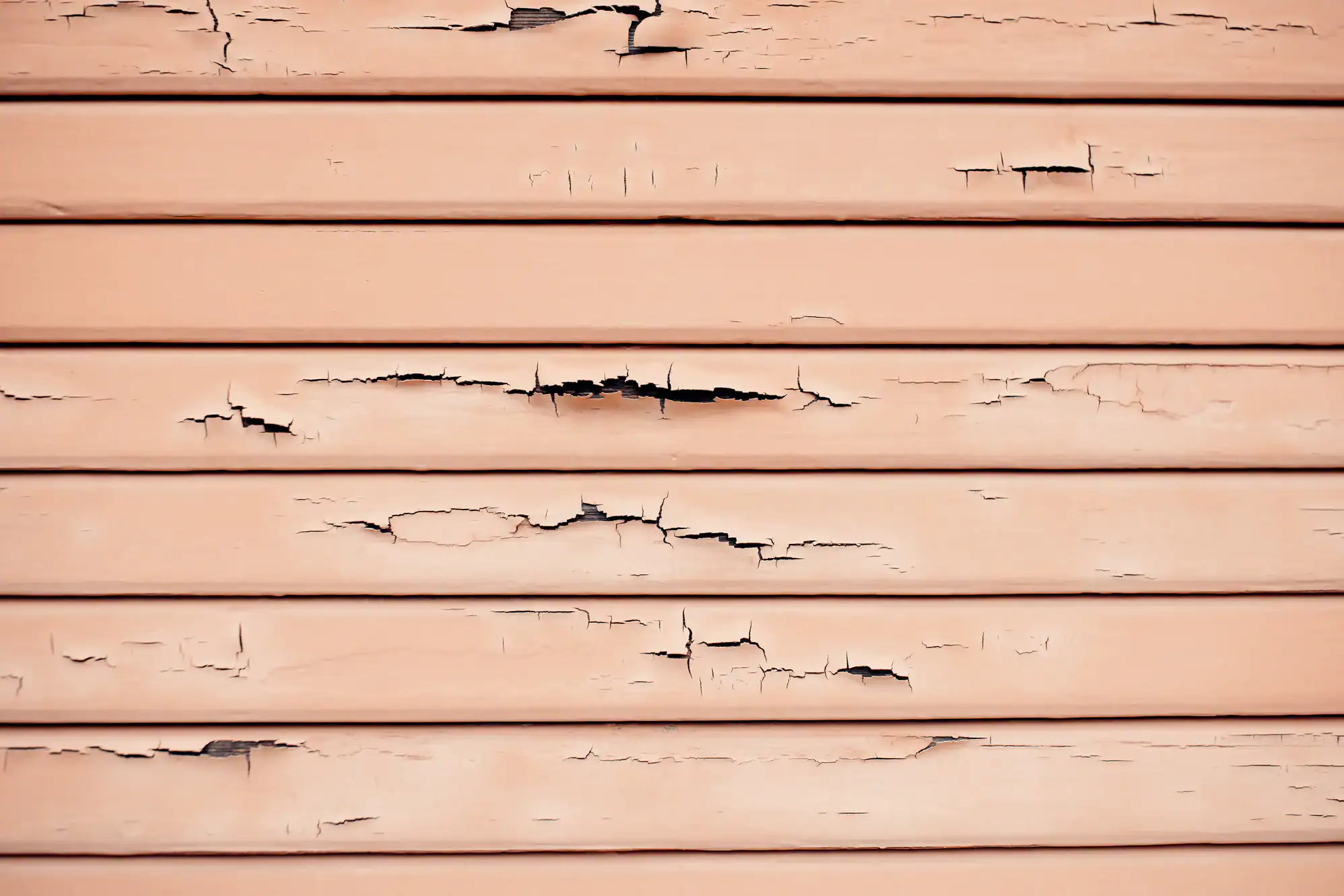
Peeling paint is the most visible sign, but the cause matters more than the symptom. When paint peels or bubbles on a San Diego County exterior, it is almost always a moisture problem. Water is getting in somewhere: through a failed caulk joint, a crack in the stucco, a gap around a window frame, or damaged siding: and the paint film is lifting because it can no longer bond to a wet substrate.
This is especially common in coastal neighborhoods like Carlsbad, Encinitas, and Pacific Beach, where the marine layer keeps exterior surfaces damp for hours every morning. It is also common on north-facing walls anywhere in San Diego County, because those surfaces dry out more slowly and stay wet longer than south- or west-facing walls that get direct sun.
Here is the thing: if you just repaint over peeling paint without addressing what is causing the moisture, the new paint will fail in the same spots within a year or two. The fix is not cosmetic; it is diagnostic. A professional painting contractor with siding and stucco experience can identify if the problem is in the paint, the substrate, the caulking, or the siding itself. That matters a lot, because painting over a damaged surface is one of the most expensive mistakes a homeowner can make.
The sign to watch for is not just peeling in one spot. It is peeling that keeps coming back in the same area, or bubbling that appears shortly after rain or heavy marine layer. That pattern tells you there is a moisture pathway that needs to be found and closed before any new coating goes on.
San Diego County averages around 266 sunny days a year. That is genuinely beautiful to live in, and it is genuinely brutal on exterior paint. UV radiation breaks down paint binders over time, causing color to fade, surfaces to chalk (that powdery residue you can wipe off with your finger), and the paint film itself to become brittle and crack.
Chalking is one of those things homeowners tend to ignore because it does not look alarming. But it means the paint’s protective properties are gone. A chalked surface is no longer repelling water, no longer blocking UV, and no longer protecting whatever is underneath it. Once you hit that stage, you are living on borrowed time before more serious damage starts.
Cracking follows a similar pattern. Fine surface cracks: sometimes called checking or alligatoring: happen when paint loses its flexibility and can no longer expand and contract with the surface as temperatures change. In San Diego County’s inland communities like Escondido, Santee, and El Cajon, where summer heat is intense and Santa Ana winds pull moisture out of surfaces rapidly, this kind of cracking tends to accelerate. Coastal properties deal with it differently: the humidity slows some of the drying, but salt air introduces its own corrosive chemistry that breaks down paint films from the outside in.
Staining or dark streaking around windows, eaves, or trim is another sign that gets missed most often: mold or mildew growth. That is a direct result of moisture sitting against a surface that no longer has an effective protective coating. In San Diego County, mildew growth on exterior surfaces is common on north-facing walls and in areas that stay shaded. Left alone, it works its way into the substrate.
The fifth sign is one that is more about timing than appearance: if your last exterior paint job was more than six or seven years ago and you live within a few miles of the coast, your coating is likely past its effective lifespan regardless of how it looks. Coastal-grade paint coatings applied by a knowledgeable contractor can extend that window, but standard paint in a salt-air environment simply does not last as long as it would inland. If you are in La Jolla, Del Mar, Coronado, or Ocean Beach, that timeline shortens further.
Want live answers?
Connect with a MRH Pro Construction & Painting expert for fast, friendly support.
One of the most common misconceptions we hear is that exterior painting is a purely cosmetic job. It is not. Your exterior paint is a protective system: it is what keeps moisture out of your siding, your stucco, and your framing. When it fails, everything behind it becomes vulnerable.
In San Diego County’s coastal zones, salt air accelerates corrosion on metal fasteners in siding panels and works its way into any gap or crack in a paint film. What starts as a cosmetic issue can become a siding replacement or stucco repair job if it is left too long. Addressing paint failure early: while it is still a paint problem: is almost always significantly less expensive than addressing it after water has had time to work its way in.
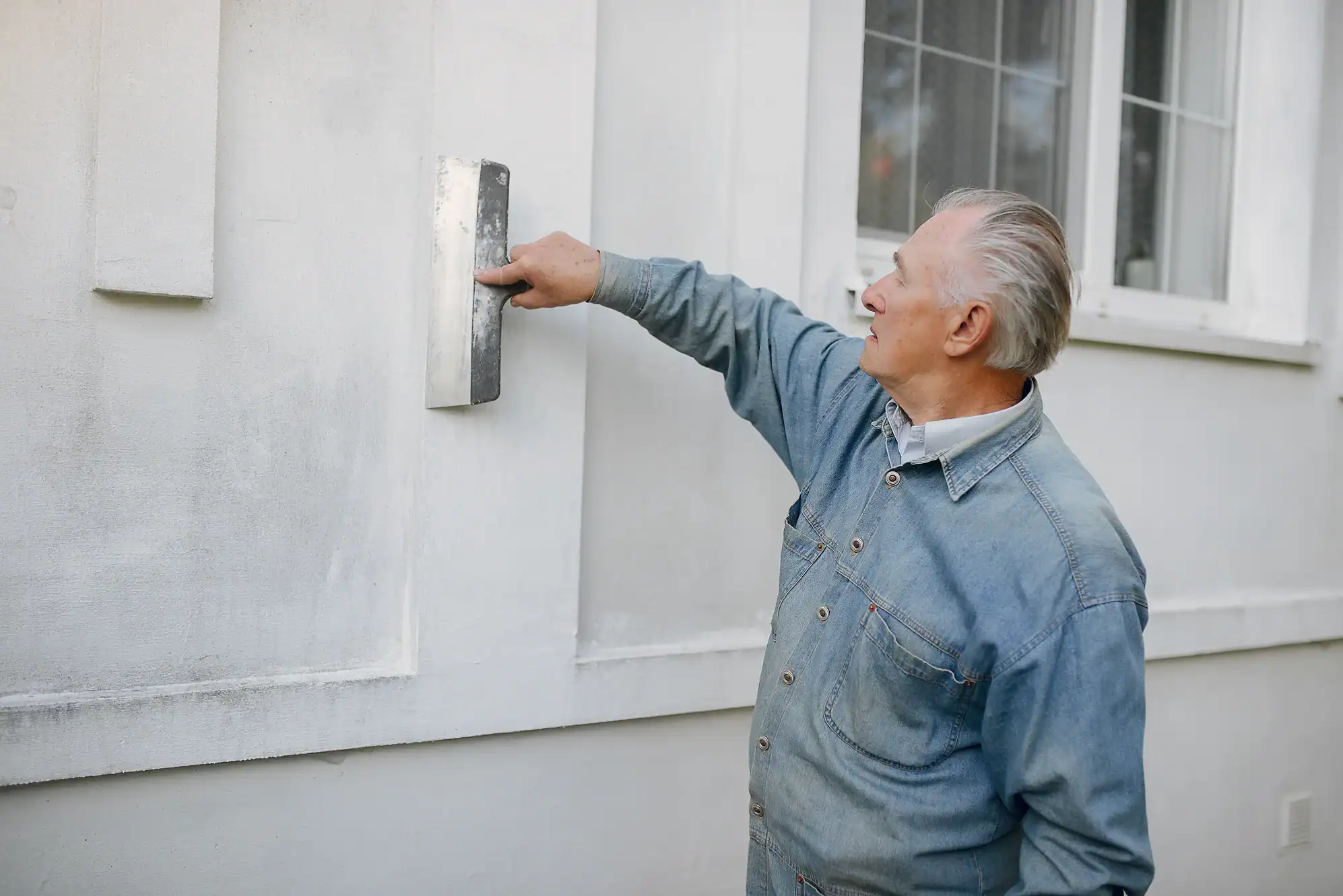
If there is one thing that separates a paint job that lasts from one that fails early, it is surface preparation. Industry professionals consistently put 70 to 80 percent of a quality exterior paint job in the prep work: cleaning, scraping, sanding, repairing cracks, recaulking gaps around windows and trim, priming bare or repaired surfaces, and making sure the substrate is sound before a single drop of finish coat goes on.
This is where unlicensed painters and weekend crews cut corners most aggressively, because prep takes time and time is money. A low bid almost always means less prep. And less prep means you will be repainting in two or three years instead of seven or eight.
We hold both a California B General Contractor license and a C-33 Painting and Decorating Contractor license. The C-33 requires at least four years of journeyman-level painting and surface preparation experience: it is not a credential that gets handed out. Our B license means we can address the full scope of what we find during prep: damaged siding, failed stucco, rotted trim, or window framing that needs attention before paint ever touches it. Most painting contractors cannot do that under a single contract. We can.
When we assess an exterior, we are not just looking at the paint. We are looking at the substrate condition, the caulking, the siding joints, the areas around penetrations and windows, and the overall moisture situation. That is the difference between painting over a problem and solving it. For properties in San Diego County’s coastal communities especially, that kind of thorough assessment is what determines if a new paint job lasts or if you are making the same call again in a few years.
For commercial properties: HOA communities in Rancho Bernardo or Otay Ranch, small office buildings in Escondido or Chula Vista, multi-unit residential in Oceanside or Vista: this matters even more. Commercial painting jobs involve more surface area, more exposure, and often HOA maintenance schedules with specific timelines and requirements. Having a licensed general contractor handle the full scope of an exterior, from siding to paint, keeps the project coordinated and accountable.
San Diego County has a large and competitive painting market. There are over 12,450 licensed C-33 contractors in California alone, and that does not count the unlicensed operators who take on painting work without proper credentials. In a market this crowded, knowing how to evaluate a contractor before you hire them is genuinely important.
The first thing to verify is the license. California’s Contractors State License Board maintains a public database at cslb.ca.gov where you can look up any contractor’s license number, confirm it is active, and see what classifications it covers. In California, any job over $500 in combined labor and materials legally requires a licensed contractor. If someone cannot give you a license number or asks you to pay entirely in cash, that is a serious red flag.
The second thing to ask about is insurance: general liability and workers’ compensation. This is not just paperwork. If an unlicensed, uninsured worker is injured on your property in California, you can be held liable. A legitimate contractor provides certificates of insurance without hesitation.
The third thing is the estimate. A professional painting contractor gives you a written, itemized estimate that covers the scope of prep work, the number of coats, the specific paint products being used, the timeline, and the payment schedule. If someone gives you a verbal quote and asks for a large upfront deposit, be cautious. Real contractors document what they are doing and hold themselves to it.
We provide detailed written estimates, use an in-house crew of seven: the same people on your job from start to finish, not subcontractors: and we clean up thoroughly at the end of every workday. For active-duty military and seniors, we also offer a 10 percent discount. In a county with Naval Base San Diego, MCAS Miramar, NAS North Island, and Camp Pendleton nearby, that is a commitment we take seriously, not a footnote.
The cabinet painting and interior work we do follows the same standard: proper prep, quality materials, and no shortcuts. If it is a kitchen cabinet refresh or a full exterior repaint on a coastal home in Carlsbad, the process is the same.
If you are seeing peeling, bubbling, chalking, cracking, mildew staining, or you simply know it has been longer than it should be since your last exterior paint job, that is your signal. San Diego County’s climate does not give paint a long grace period, especially within a few miles of the coast. The longer those signs sit, the more likely you are dealing with a substrate issue underneath the surface, not just a cosmetic one.
Acting early keeps it a painting project. Waiting turns it into a repair job. The difference in scope, and cost, can be significant. If you want a straightforward assessment of what your property needs, MRH Pro Construction & Painting is based in Escondido and works across all of San Diego County. Reach out for a free, written estimate and we will tell you what we see: no pressure, no guesswork.
Article details:
Share:
Continue learning: