
Not all energy efficient vinyl windows perform the same. Here's what the ratings mean, what to watch for, and why installation is the variable most San Diego County homeowners overlook.
Share:
Summary:
If you’ve been watching your SDG&E bill climb and suspecting your windows are part of the problem, you’re probably right. Heat gain and heat loss through windows account for 25 to 30 percent of residential heating and cooling energy use. That’s not a small number. But once you start researching replacement windows, you run into a flood of specs, brand claims, and competing opinions that make a straightforward decision feel complicated. This guide cuts through the noise. We’ll explain what actually makes a vinyl window energy efficient, what the ratings mean in plain terms, and what San Diego County homeowners specifically should be looking for before making a decision.
The EPA’s ENERGY STAR program estimates that replacing single-pane windows with certified energy efficient models can save homeowners between $71 and $501 per year on energy bills. If you’re upgrading from older double-pane windows, the range is more modest — roughly $27 to $197 annually. Those numbers are national averages, and they actually understate the impact for San Diego County residents.
Here’s why: SDG&E has some of the highest residential electricity rates in the country. Every kilowatt-hour you stop paying for is worth more here than it would be in most other markets. For homeowners in inland communities like Escondido, El Cajon, Santee, or Ramona — where summer temperatures regularly hit 95 to 105°F — the cooling load through inefficient windows is substantial. New windows with the right specs don’t just trim your bill a little. They change how your home feels in July and August. If you’re considering an upgrade, energy efficient vinyl windows can provide improved insulation and help reduce heat transfer.

Walk into any showroom or browse any window company’s website and you’ll see ENERGY STAR certification mentioned prominently. What most buyers don’t realize is that ENERGY STAR is a floor, not a ceiling. It tells you a window meets a minimum performance threshold — it doesn’t tell you how well it performs within that range. That’s where the NFRC label comes in.
The National Fenestration Rating Council independently tests and rates virtually every replacement window on the market. Their black-and-white label displays two numbers that matter most: U-factor and Solar Heat Gain Coefficient, or SHGC.
U-factor measures how well the window resists heat transfer. Lower is better. For California, you’re looking for a U-factor of 0.30 or less — which is also the minimum required under California’s updated Title 24 energy code, effective January 1, 2026. Any permitted window replacement in California now has to meet this standard. Single-pane windows are simply no longer a legal option for permitted work.
SHGC measures how much solar heat the window lets in. For San Diego County’s climate — especially for south- and west-facing windows in inland neighborhoods — a lower SHGC is what you want. California’s Title 24 standard requires 0.23 or less for replacement windows. That matters a lot when your home is getting direct afternoon sun for six hours a day.
Beyond the ratings, the physical construction of the window determines how well it holds those numbers in practice. Quality vinyl windows use multi-chambered frames rather than hollow ones, which adds meaningful thermal resistance. The spacer between the panes should be non-metallic — metal spacers conduct heat right through the edge of the glass, which is where a lot of thermal performance gets lost. Argon gas fill between the panes adds another layer of insulation; argon is about six times denser than air, which significantly slows heat transfer. Low-E glass coatings reduce energy loss by 30 to 50 percent while blocking up to 75 percent of UV rays. For San Diego County homeowners dealing with 266-plus sunny days a year, that UV protection matters beyond just energy savings. It’s what keeps your floors, furniture, and window treatments from fading.
Frame material is where a lot of buyers get stuck. Fiberglass gets a lot of attention as a premium option, and wood has its appeal for certain architectural styles. But for most San Diego County homes, vinyl is a genuinely strong choice — and not just because of cost.
Aluminum frames are thermally conductive. Heat moves through them easily, which works against you in summer and again in winter. In coastal communities like Encinitas, Carlsbad, La Jolla, or Coronado, aluminum also corrodes from salt air exposure over time. That’s a maintenance and longevity issue that vinyl simply doesn’t have. Vinyl doesn’t conduct heat the way metal does, doesn’t corrode, doesn’t need painting or sealing, and holds up well in both the marine air along the coast and the dry heat inland.
Compared to fiberglass, vinyl is more affordable without sacrificing meaningful performance for most residential applications. Modern premium vinyl windows with Low-E glass and argon fill perform well within ENERGY STAR’s certified range and comfortably meet California’s Title 24 requirements. Entry-level fiberglass doesn’t automatically outperform mid-range vinyl — it depends on the specific product, the glass package, and how the window is installed.
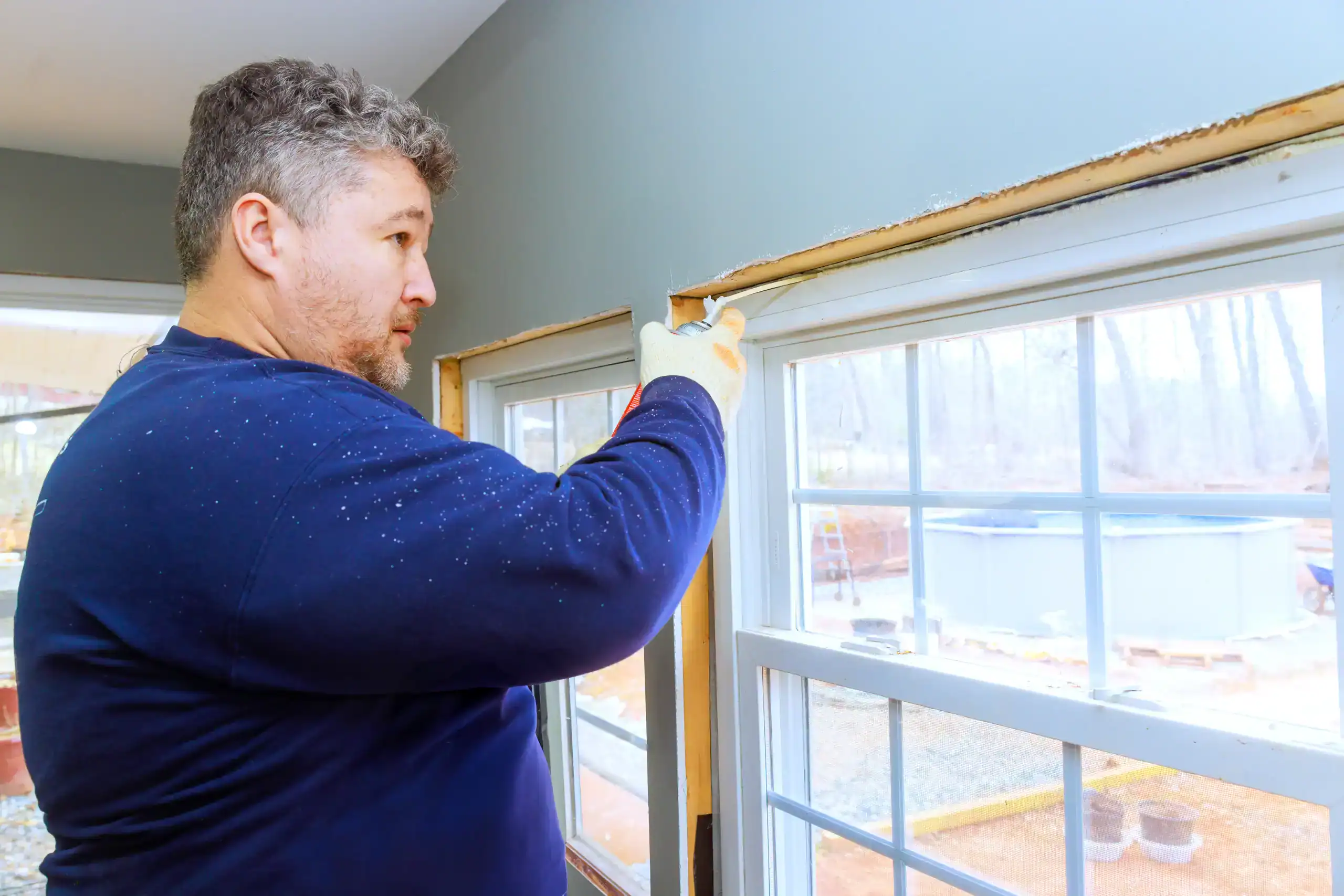
That last point deserves more attention than it usually gets. The frame material and glass specs are what most buyers compare. But a window installed with improper flashing, inadequate air sealing, or poor frame integration can lose a significant portion of its rated thermal performance regardless of how good the product is. A gap around the frame, a missed seal, or flashing that doesn’t properly integrate with the surrounding siding — these are installation problems, not product problems. And they’re not visible once the job is done. This is why working with a contractor who has real exterior remodeling experience matters. Installing a window isn’t just placing a product in an opening. It’s integrating that window into the building envelope in a way that actually delivers the performance on the label.
Want live answers?
Connect with a MRH Pro Construction & Painting expert for fast, friendly support.
Cost ranges for window replacement in San Diego County vary depending on window size, frame style, glass package, and the scope of the project. For a standard vinyl double-hung window, installed cost typically falls in the range of $390 to $1,128 per window, with the most common installations for standard-sized windows landing around $400 to $500. Labor generally accounts for 10 to 20 percent of the total project cost.
Those ranges reflect the installed cost of the window itself. If your project involves replacing trim, addressing deteriorated framing around the opening, or integrating new windows with existing siding or stucco, the scope expands accordingly. Getting a detailed, written estimate that breaks down materials and labor is the only way to compare quotes accurately.
This is one of the most common questions we hear, and the honest answer is: in most cases, yes. Window replacement in San Diego County generally requires a permit, and since California’s updated Title 24 energy code took effect in January 2026, the compliance documentation required for permitted window work has become more specific. The CF-1R form certifies that the windows being installed meet prescriptive energy performance requirements — U-factor of 0.30 or less, SHGC of 0.23 or less, dual-glazed, Low-E2 standard.
What makes this more complicated than it sounds is that each city in San Diego County runs its own permit office with its own process. Escondido, Carlsbad, Chula Vista, and the City of San Diego all have separate offices, separate timelines, and different levels of familiarity with the current code requirements. A contractor who does this regularly in San Diego County knows how to move through each jurisdiction efficiently. One who doesn’t can slow your project down significantly or, worse, submit documentation that doesn’t satisfy the inspector.
Skipping permits isn’t a solution. Unpermitted window work can surface as a problem when you sell the home — buyers’ agents and inspectors look for this, and lenders sometimes require it to be resolved before closing. The permit process exists to protect you as the homeowner, and working with a licensed contractor who handles it is the cleanest path through.
“Affordable” means different things depending on what you’re comparing it to. Compared to doing nothing, new windows have a real payback period — and in San Diego County, that payback is faster than it would be in most other markets because of SDG&E’s electricity rates. Every kilowatt-hour saved has more dollar value here than the national average savings figures suggest.
The federal Energy Efficient Home Improvement Credit — Section 25C — allows homeowners to claim 30 percent of the cost of ENERGY STAR certified windows, up to $600 per year. That’s a direct reduction in what you pay out of pocket, and it’s available through 2032 under current law. Verify the current rules with a tax professional before filing, but this credit is real and worth factoring into your budget.
On the resale side, vinyl window replacement typically returns 68 to 76 percent of the project cost when you sell — and some premium installations reach as high as 85 percent depending on the scope and market conditions. Real estate professionals report that 37 percent of agents identify windows, doors, and siding as among the most important green home features their clients ask about. In a competitive San Diego County housing market, updated, energy-efficient windows aren’t just a comfort upgrade — they’re a selling point.
There’s also the quality-of-life piece that doesn’t show up in any ROI calculation. Rooms that used to be unusable in the afternoon because of heat gain become livable again. Furniture and flooring stop fading. Drafts disappear. For homeowners in inland San Diego communities who’ve been running their AC at full capacity just to stay comfortable, that change is immediate and noticeable.
At MRH Pro Construction & Painting, we offer a 10 percent discount to military families and seniors. With Camp Pendleton, Naval Base San Diego, MCAS Miramar, and NAS North Island all within San Diego County, a lot of our clients have military connections — and we think that deserves recognition. If budget is a real constraint, it’s worth asking about when you reach out.
Energy efficient vinyl windows are a sound investment for most San Diego County homes — but the product is only part of the equation. The ratings on the NFRC label tell you what a window is capable of. The installation determines whether it actually delivers that performance in your home.
California’s Title 24 requirements, San Diego County’s climate zones, SDG&E’s electricity rates, and the permit processes across Escondido, Carlsbad, Chula Vista, and the City of San Diego all factor into what a successful window replacement project looks like here. This isn’t a market where a generic approach works particularly well.
If you’re ready to move from research to a real conversation, we at MRH Pro Construction & Painting are based in Escondido and serve homeowners throughout San Diego County. We handle permits, we do the work ourselves with our own crew, and we give you a clear, detailed estimate before anything starts. Reach out by phone or text at 619-481-7245 — we’re available Monday through Friday, 7am to 5pm.
Article details:
Share:
Continue learning: