From pulling old siding to passing final inspection, here is what a professional siding installation looks like in San Diego County, bringing no surprises and no guesswork.
Share:
Summary:
If you are planning a siding replacement in San Diego County and trying to figure out what you are signing up for, you are in the right place. Most contractor websites give you a vague list of steps that sounds reassuring but does not prepare you for anything real, missing the timeline, the decisions you will face mid-project, and definitely what happens when the old siding comes off and something unexpected hides behind it.
We have been doing exterior remodeling in San Diego County for 16 years. This is what a professional siding installation looks like, from the first day on-site to the final walkthrough.
The visible part of siding installation, meaning the phase where new panels go up and the house starts looking different, stands as the final thing that happens. Before any new material is installed, real prep work determines if the finished product holds up for 20 years or starts failing in five.
It starts with full removal of the existing siding. Not layering new material over old, but full removal. This is non-negotiable if you want the installation done right, and it is the step that opens the door to everything else. A professional siding contractor can then properly inspect and prepare the underlying surfaces before installing the new siding.

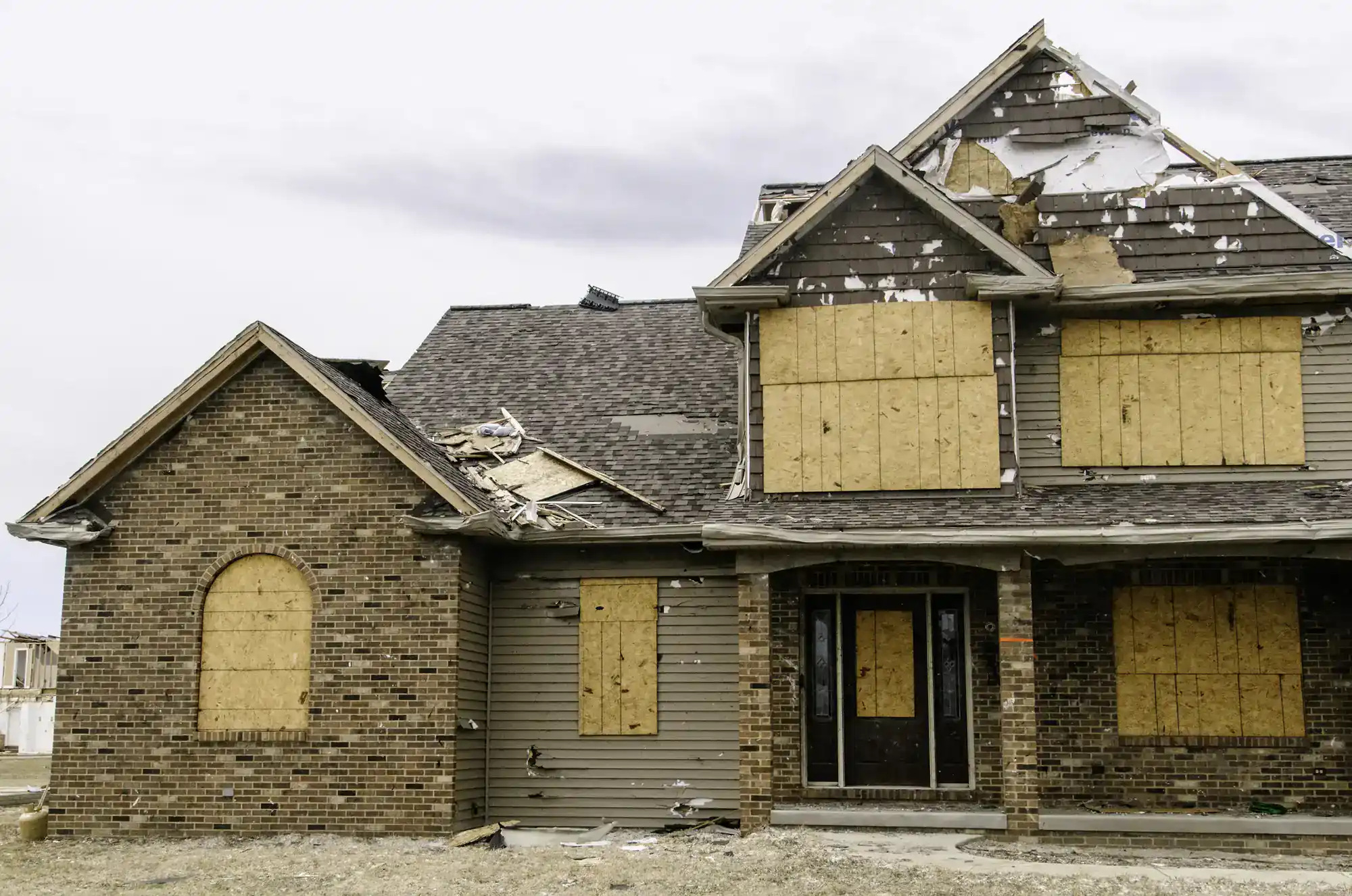
Here is what no one warns homeowners about clearly enough: what you find under old siding in San Diego County homes is not always pretty. Once the existing cladding comes off, the sheathing, which serves as the structural layer underneath, gets a full inspection before anything else happens.
In a county where coastal moisture, marine layer humidity, and decades of temperature swings are facts of life, that inspection regularly turns up rot, mold, pest damage, or a failed weather-resistant barrier that should have been replaced years ago. A home in Encinitas or Carlsbad that has been absorbing salt air for 25 years looks different under the siding than a newer build in Poway or Rancho San Diego. The damage is often invisible from the outside, which is precisely why it gets missed until a project like this creates the opportunity to find it.
When we find damaged sheathing, we document it, show you what we found, and get your approval before expanding the scope. The cost can change. We understand that is not what anyone wants to hear. But covering up rot and mold with new fiber cement siding is not a solution; it is a problem deferred and a more expensive one down the road.
This phase is also when the weather-resistant barrier gets installed or replaced. The WRB, meaning house wrap or felt paper, is the moisture shield that sits between your sheathing and your siding. Skipping it or installing it improperly ranks as one of the leading causes of siding failure, and it is not something you will see from the street until water is already getting into your walls. A proper installation always includes a correct, fully sealed WRB before the first panel goes up.
San Diego County averages 266 sunny days a year. That sounds ideal for exterior work, and it mostly is, but it also means your siding absorbs intense UV exposure, salt-laden marine air, and, in inland areas like El Cajon, Santee, and Escondido, significant temperature swings between day and night.
These concerns are far from abstract. They explain why material selection and installation methods matter so much here specifically. For coastal communities like La Jolla, Del Mar, Solana Beach, Oceanside, and Pacific Beach, the marine layer maintains a near-daily presence. Salt air is corrosive. It works its way into improperly sealed siding systems and attacks fasteners, flashing, and the sheathing behind the panels long before you see any exterior sign of it.
Coastal installations require corrosion-resistant fasteners, correctly specified flashing at every window and door penetration, and siding products rated for this environment. That is why we install James Hardie products specified for HardieZone HZ10, which serves as the climate zone designation for coastal Southern California. This is not a generic fiber cement product. It is engineered for California’s salt air, UV load, and temperature extremes. Using a product from the wrong climate zone counts as an installation error that can void the manufacturer warranty, even if the siding itself is genuine James Hardie material.
We operate as an Elite Preferred Contractor with James Hardie, meaning we follow the installation standards required to keep that warranty intact. For inland and WUI communities like Ramona, Alpine, Jamul, and parts of Escondido, fire resistance represents a real factor. San Diego County has lived through the Cedar Fire, the Witch Creek Fire, and the Lilac Fire. Fiber cement siding is non-combustible. It will not ignite, will not melt, and will not fuel a fire the way wood or vinyl will. For homeowners in fire hazard severity zones, that feature is not a selling point; it is a baseline requirement.
Want live answers?
Connect with a MRH Pro Construction & Painting expert for fast, friendly support.
Once the old siding is off, the sheathing is inspected and repaired, and the WRB is correctly installed, the physical installation begins. A complete siding project on a typical San Diego County home can take up to 14 working days from start to final walkthrough. That timeline accounts for every phase being done properly rather than rushed to hit an arbitrary deadline.
What you should expect during that time is consistent communication, a crew that shows up as scheduled, and no surprises left unmentioned beforehand.
One of the most common complaints in the siding industry, as documented in homeowner reviews across the country, is that a homeowner hires a named contractor, and on Day 1, strangers show up who have no connection to the company they signed a contract with. The contractor subbed the work out without disclosing it. Quality suffers. Accountability disappears.
We do not work that way. Our crew consists of seven people employed directly by us, and the same crew that starts your project finishes it. No handoffs. No undisclosed subcontractors. The people who pull your old siding on Day 1 are the people doing the final caulking and cleanup before the walkthrough. That consistency matters for quality control in ways that remain hidden until something goes wrong on a job where it does not exist.
We hold both a Class B General Contractor license and a C33 Painting license, with both being active and verifiable directly on the CSLB website at any time. California’s CSLB is one of the highest-rated licensing boards in the country. Any construction project over $500 in California legally requires a licensed contractor. If you are evaluating contractors for a siding project in San Diego County, looking up their license number on cslb.ca.gov takes about 90 seconds and tells you a lot.
We also pull every permit required for your project. In San Diego County, siding replacement typically requires a building permit. The process varies by jurisdiction, as the county’s 18 incorporated cities each have their own building departments, and we handle it entirely. Unpermitted siding work can void your homeowner’s insurance coverage and create complications when you sell. That process provides protection for you, making it simply a part of the job.
One question we hear often concerns price changes after the project starts. Truthfully, costs can shift, and the most common reason is hidden damage discovered during sheathing inspection. A project that starts at one number can grow if there is rot, mold, or structural issues behind the old siding. We have seen it happen on homes across San Diego County, particularly in older housing stock in East County communities and coastal homes that have absorbed moisture for decades.
What we commit to is transparency: if we find something, we show you, explain what it means, and get your sign-off before proceeding. No one should be surprised by a scope change on their invoice.
Homeowners also ask if they need to leave during installation. You do not. The work is exterior, and your daily routine inside the house will not be significantly disrupted. That said, we do recommend being available, or at least reachable, at key moments: when we complete the sheathing inspection and share findings, and at the final walkthrough before we consider the project closed.
A question that comes up less often but matters just as much concerns the warranty that comes with new siding. There are two distinct warranties at play. The manufacturer warranty, which is James Hardie’s in our case, covers the product itself. The workmanship warranty covers the installation. To keep the manufacturer warranty valid, the installer needs to meet specific certification requirements. Our Elite Preferred Contractor status with James Hardie is what protects that coverage for you. A contractor who installs genuine Hardie products but lacks certification can still void your warranty through improper installation, such as wrong fasteners, incorrect overlap, or skipped steps in the HardieZone HZ10 spec. It is worth asking about before you sign anything.
For homeowners who qualify, we offer a 10% discount for military families and seniors. San Diego County has one of the largest active-duty and veteran military populations in the country, and we are glad to offer something concrete rather than just a thank-you.
A siding installation done right is a 20-plus year investment in your home’s protection, performance, and value. In San Diego County’s climate, from the coast in Carlsbad to inland in Escondido, the details of how it is installed matter just as much as what is installed. This includes the right WRB, the right climate-zone product, the right fasteners, and the right permits. None of it is complicated, but all of it requires a crew that knows this market well.
If you are at the point of evaluating contractors, the most useful things you can do are verify their CSLB license, ask directly if they use subcontractors, and confirm their James Hardie certification status. Those three questions will tell you most of what you need to know.
When you are ready to talk through your project, MRH Pro Construction & Painting is based in Escondido and serves all of San Diego County. Reach out and we will give you a straight answer on what your home needs.
Article details:
Share:
Continue learning: