San Diego County homes are getting sharper rooflines in 2026. Here's what's driving the trend — and what to know before you replace your trim and fascia.
Share:
Summary:
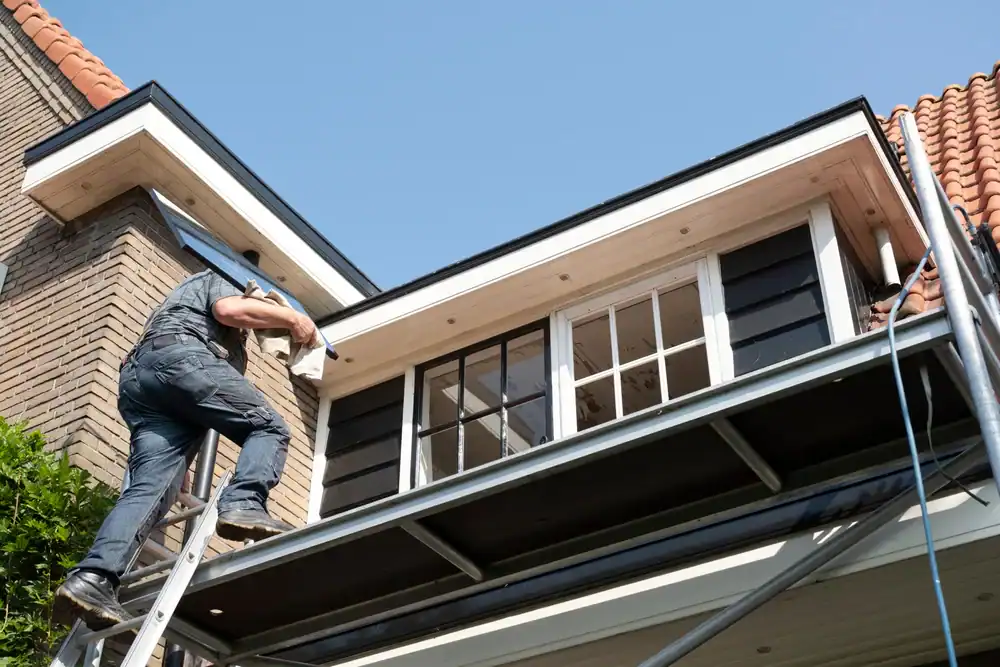
Most homeowners don’t think about their fascia until something goes wrong — a gutter pulling away from the house, a dark stain spreading across the roofline, or soft wood that shouldn’t be soft. By then, the damage has usually been building for a while. The good news is that replacing deteriorated trim and fascia isn’t just a repair. Done right, it’s one of the most visible upgrades you can make to your home’s exterior. And in 2026, the design trends are finally catching up to what San Diego County homes have always been capable of. Here’s what you need to know before you start.
Fascia boards run along the edge of your roofline, capping the ends of your rafters and giving your gutters something solid to attach to. Trim covers the transitions — around windows, along corners, at the base of siding — and ties the whole exterior together visually. Neither one is decorative in the way people assume. Both are doing real protective work.
When fascia fails, water doesn’t just stain the board. It works its way into the rafter tails, the wall cavity, and sometimes the attic. Gutters lose their anchor and start to sag or separate. What looked like a cosmetic issue becomes a structural one, and the repair cost climbs fast. That’s why we always say: the damage you can see is rarely the whole story.
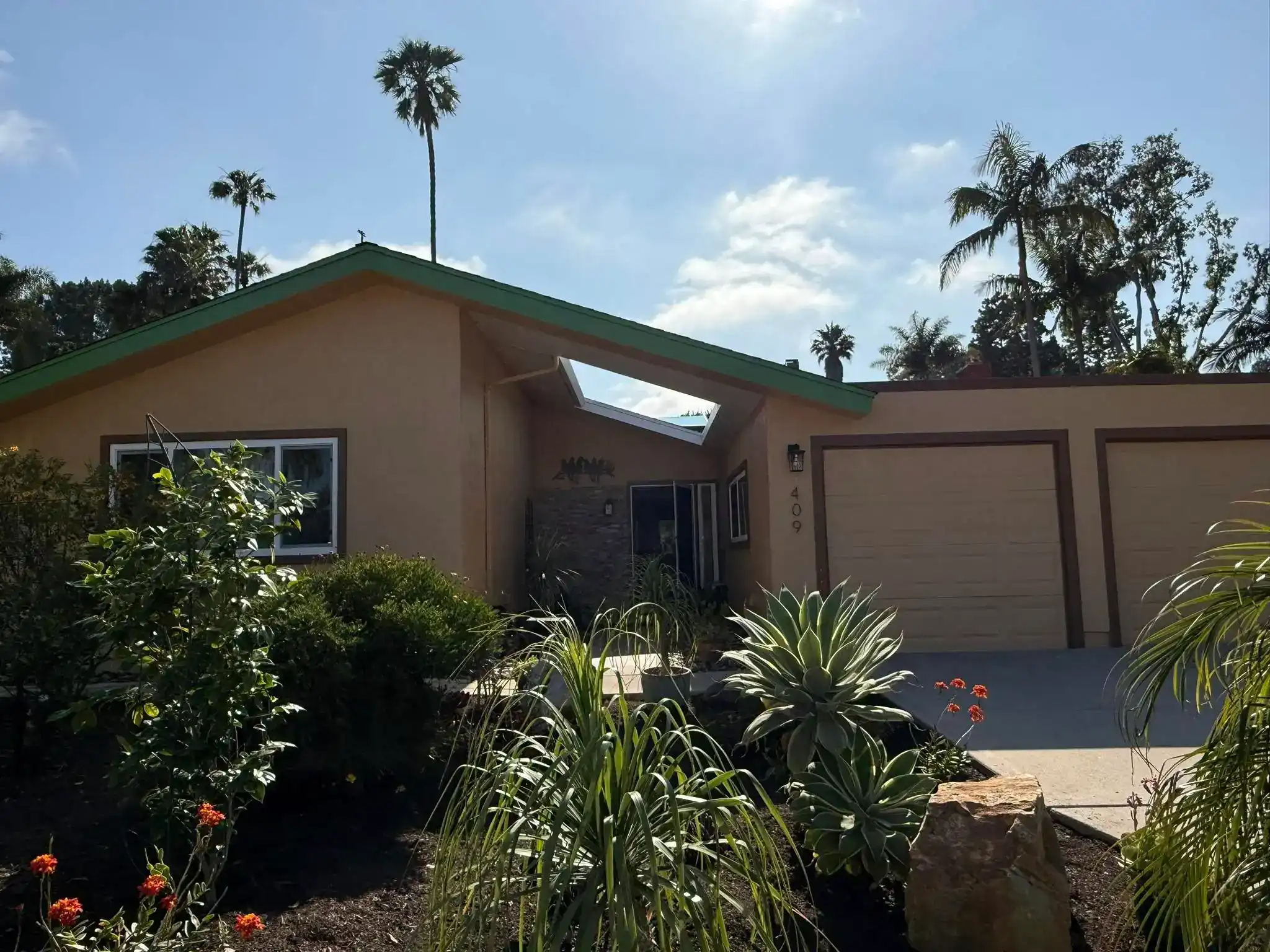
San Diego County has a reputation for perfect weather, and in a lot of ways that’s earned. But the same conditions that make it a great place to live are genuinely tough on exterior wood. The combination of intense UV, dry heat in summer, and then the wet season hitting in November creates a two-phase damage cycle that breaks down paint, dries out caulk joints, and leaves wood vulnerable to moisture intrusion right when the rain arrives.
In coastal communities like Encinitas and Oceanside, the marine layer adds another layer of stress. Locals know June Gloom — that persistent morning fog that settles in from May through June. What most people don’t realize is how much moisture that fog deposits on wood surfaces over weeks and months, even without a single raindrop. Salt air compounds the problem, corroding metal fasteners and accelerating paint failure on south- and west-facing rooflines where sun exposure is highest.
Inland, the dynamic shifts. In Escondido, Temecula, and Spring Valley, summer temperatures regularly push past 100°F. That thermal cycling — expanding and contracting with the heat — cracks caulk joints and causes paint to peel faster than almost anywhere else in the county. Wood fascia that looks fine in spring can be showing real stress by September.
In Alpine, the stakes are higher. The community sits in a Very High Fire Hazard Severity Zone, and anyone who was here during the Cedar Fire in 2003 doesn’t need a reminder of what that means. Fire-resistant fascia materials — fiber cement and aluminum — aren’t just a smart upgrade in Alpine; for many properties, they’re becoming the only sensible choice.
The point isn’t to scare anyone. It’s to explain why material selection matters here in a way it doesn’t in other parts of the country, and why a contractor who understands San Diego County’s specific conditions will give you better advice than one working from a generic product list.
Wood fascia is what most older homes in San Diego County were built with, and it can still perform well — but only with consistent maintenance. Painting or sealing every five to seven years is the minimum in coastal conditions. Most homeowners don’t keep that schedule, and the marine layer doesn’t wait. For homes in Encinitas, Bonita, or western Chula Vista where humidity is a persistent factor, wood is increasingly hard to recommend as a long-term solution.
PVC and aluminum fascia are popular alternatives. Both resist moisture and don’t rot, which solves the most common failure mode. Aluminum in particular handles salt air well, which is why it shows up frequently in Oceanside and coastal Encinitas. The tradeoff is lifespan — both materials typically last 10 to 20 years before they need attention, and aluminum can dent.
Fiber cement is what we reach for most often on full replacements. It holds paint better than wood or PVC, resists moisture, handles thermal cycling without cracking, and carries a 30-plus-year lifespan in San Diego County’s conditions. It also carries a Class A fire rating, which matters in Spring Valley, Alpine, and parts of Escondido where wildfire risk is real. James Hardie’s HZ10 formulation is specifically engineered for California’s coastal humidity and UV intensity — not a generic product shipped from a warehouse, but a material designed for exactly the conditions we’re working in.
The cost difference between materials is real, but it narrows considerably when you think in terms of lifetime cost rather than upfront price. Replacing vinyl fascia twice over 20 years costs more than installing fiber cement once and leaving it alone for 30.
Want live answers?
Connect with a MRH Pro Construction & Painting expert for fast, friendly support.
The biggest shift in exterior design this year is contrast. Homeowners across San Diego County are moving away from the monochromatic look — body and trim in the same family — and toward bold, defined rooflines with dark fascia against lighter siding. Charcoal, near-black, and deep warm browns are showing up on homes in Bonita, Encinitas, and Temecula in a way that reads as intentional and modern rather than heavy or dated.
This trend works especially well on traditional and contemporary homes because it creates visual anchoring at the roofline. It makes a house look more custom-built, more finished. And practically speaking, replacing deteriorated wood fascia with fiber cement and painting it in a deep, UV-resistant tone is a structural repair and a design upgrade in the same project.
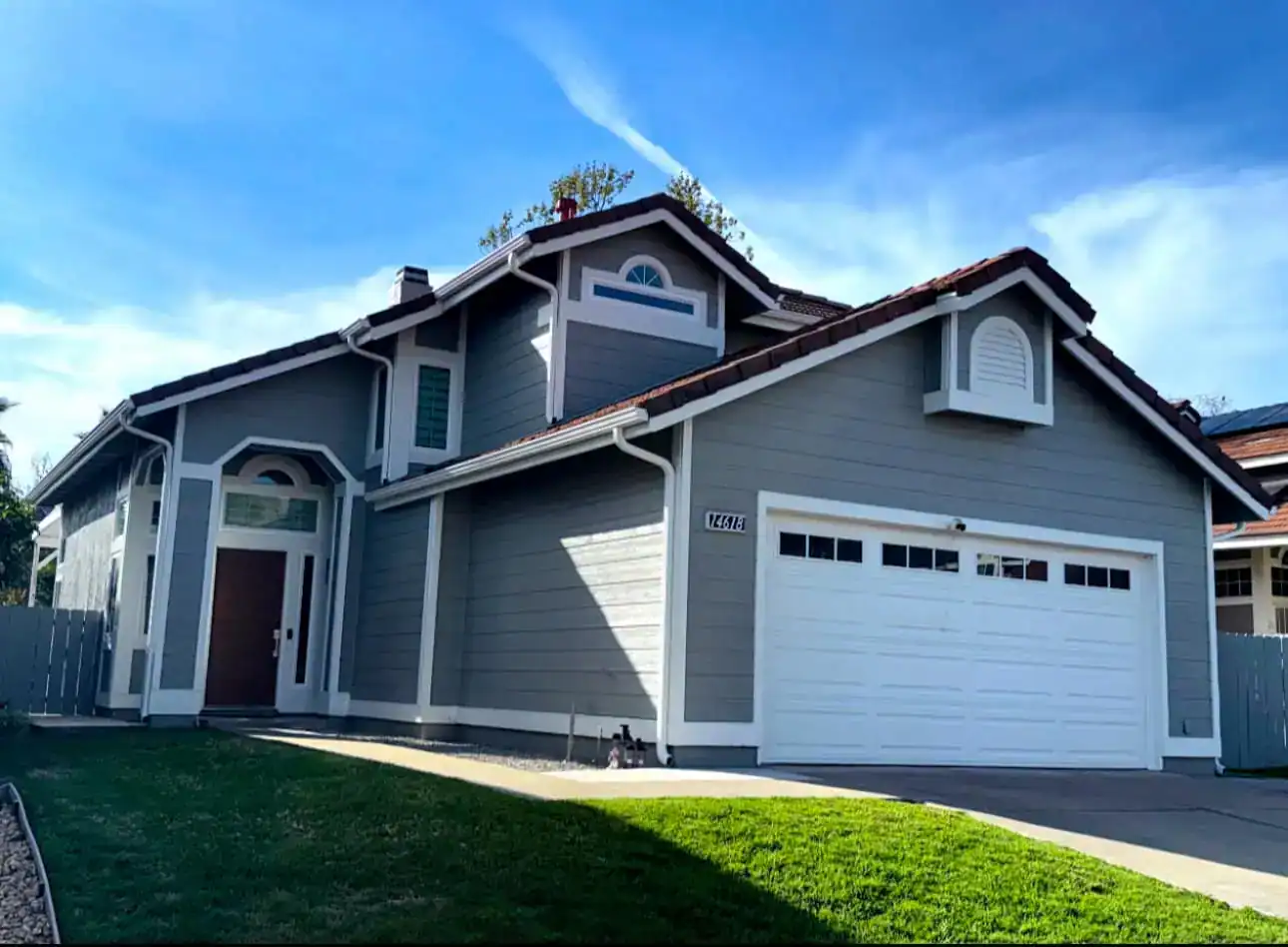
Color selection for exterior trim and fascia isn’t just about what looks good in isolation — it’s about how your home reads from the street, in your neighborhood, and in different light conditions. San Diego County’s strong natural light changes how colors read throughout the day, which is why a dark trim color that looks severe in a showroom can look grounded and sophisticated on a home in Escondido or Temecula.
The palettes getting the most traction in 2026 pair warm mid-tone body colors — aged linen, dusty sage, warm greige, soft clay — with deep, crisp trim in charcoal or near-black. The contrast gives the home definition without making it feel stark. In Bonita’s more traditional architectural landscape, where homes tend to be larger and sit on bigger lots, deep warm browns and dark bronze tones are a natural fit. In coastal Encinitas, where contemporary design is more common, true charcoal and black trim read as clean and intentional.
One practical note: dark colors absorb more heat, which means the paint and the material underneath need to be up to the task. In Escondido and Temecula where summer temperatures regularly hit triple digits, a dark fascia painted with a standard exterior paint can experience accelerated thermal cycling. High-quality exterior coatings formulated for the West Coast — with higher resin content and better UV pigments — handle this significantly better than budget alternatives. This is one area where the paint choice matters as much as the color.
We also see homeowners in Chula Vista and Oceanside using trim updates as a way to differentiate their home in a competitive real estate market. When median home prices are consistently above $800,000 across San Diego County, curb appeal improvements have a real dollar impact. A clean, high-contrast roofline with well-maintained trim signals to buyers that the home has been cared for — which is exactly the impression you want.
A lot of homeowners approach fascia work expecting a straightforward swap — old board out, new board in. Sometimes it is that simple. More often, there’s something worth checking first: rafter tail condition, adjacent framing, gutter attachment points, and whether any water intrusion has reached behind the fascia into the wall cavity. A thorough assessment before work starts is what separates a repair that lasts from one that fails in two seasons.
In California, this kind of work requires a licensed contractor. Structural exterior carpentry falls under a Class B General Building license. If painting is part of the scope — and it almost always is — a C33 Painting and Decorating license covers that portion. We hold both, which means one crew handles everything from removing the rotted board to applying the final coat, with no handoffs and no gaps in who’s accountable for what.
Permitting is another area where local knowledge matters. Homes in Escondido, Oceanside, or Chula Vista permit through their respective city building departments. Homes in unincorporated San Diego County — Spring Valley, Alpine, Bonita — go through the County Planning and Development Services office. Getting that wrong adds delays and headaches. We manage permits and inspections as part of every project, so you don’t have to figure out which office applies to your address.
For military and veteran homeowners in Oceanside and Chula Vista — both of which sit close to Camp Pendleton and Naval Base San Diego — we offer a 10% discount on all exterior remodeling work. Same for senior homeowners across San Diego County. No fine print, no hoops.
The average fascia board replacement in San Diego County runs between $797 and $1,167 based on completed local projects, with a full range of $237 to $1,781 depending on scope and materials. A typical single-story home has roughly 250 linear feet of fascia, so full replacements on larger homes will run higher. Getting a written, itemized estimate before any work starts is the standard — and if a contractor can’t provide one, that’s a signal worth paying attention to.
Trim and fascia work is one of those projects that pays off in multiple directions at once — you fix a structural problem, improve how the home handles water and weather, and walk away with an exterior that looks sharper than it did before. In a market like San Diego County, where home values are high and buyers notice details, that combination matters.
The key is getting the material right for your specific location, the assessment right before any boards come off, and the contractor right from the start. Sixteen years of exterior remodeling in San Diego County has taught us what holds up in Encinitas’s salt air, what survives Temecula’s summer heat, and what Alpine homeowners actually need when fire resistance isn’t optional.
If your roofline is overdue for attention — or you just want to know what your options look like — reach out. We’ll take a look and give you a straight answer.
Article details:
Share:
Continue learning: