Replacing siding, windows, or stucco in San Diego? Find out which exterior projects require a building permit before work begins.
Share:

Summary:
If you’re planning to replace your siding, swap out old windows, or repair cracked stucco, the permit question comes up fast. Do you need one? Who pulls it? What happens if the work gets done without one? These are reasonable questions, and the answers aren’t always obvious — especially in San Diego County, where the rules layer on top of each other depending on where you live and what you’re doing. This guide walks through which exterior projects trigger a building permit requirement, what the process actually looks like, and what to watch for before any work starts.
The City of San Diego’s Development Services Department (DSD) requires a building permit for most structural or material changes to a property — and that includes a lot of common exterior work. Siding installation and replacement, window replacement, stucco remediation, and any work that changes the building envelope all typically require a permit. The governing exemption list lives in San Diego Municipal Code §129.0203, and if your project isn’t on it, a permit is required.
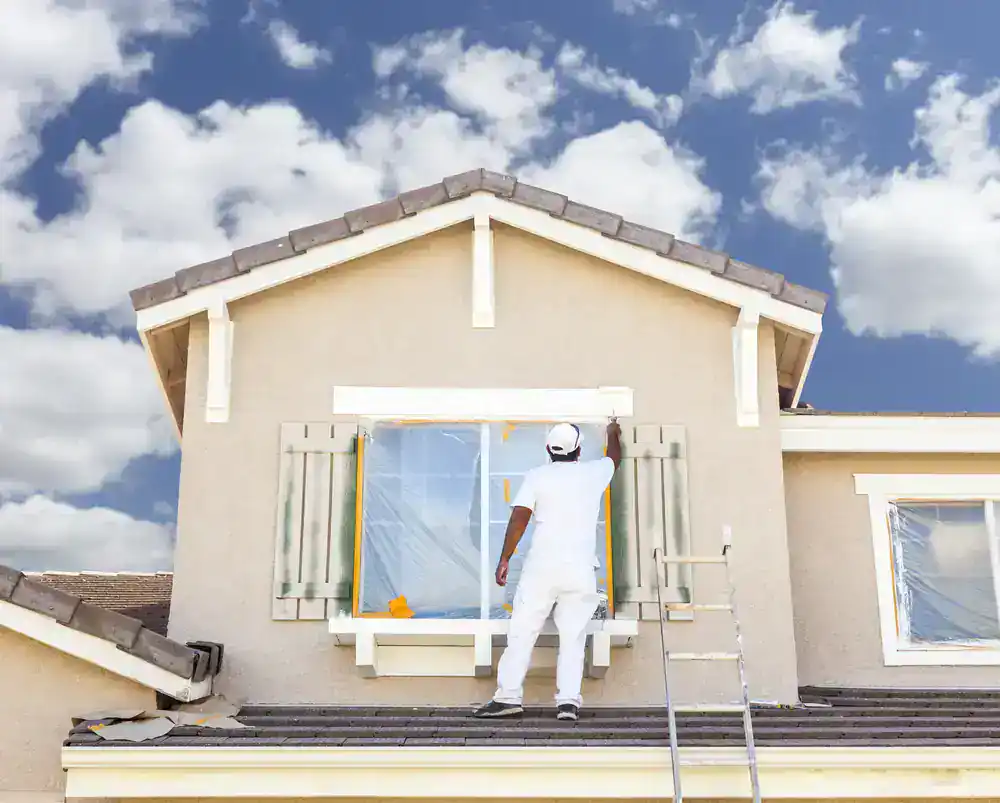
Exterior painting on its own generally doesn’t need a permit. But the moment painting is part of a larger project — say, repainting after new siding goes up — it’s covered under that project’s permit. Gutter installation in most cases doesn’t require a standalone permit either, though it depends on scope and whether it connects to a drainage system. The cleaner way to think about it: if the work changes the structure, the materials, or the weatherproofing of your home’s exterior, assume a permit is involved until you confirm otherwise.

Yes — almost always. This is one of the most common misconceptions we run into. Homeowners assume that swapping out old windows for new ones is a straightforward swap that doesn’t require paperwork. In most cases in San Diego, that’s not accurate.
A like-for-like window replacement — same size, same opening, no structural changes — may qualify for what the City calls a No-Plan Building Permit, which is a simplified review process. But it still requires a permit. If you’re changing the size of the opening, adding a window where there wasn’t one before, or doing anything that touches the structural framing around the window, you’re looking at a full permit with plans.
There’s also California Title 24 to consider. These are the state’s energy efficiency standards, and they’re among the strictest in the country. Any window replacement in San Diego needs to meet Title 24 requirements — the right U-factor, the right solar heat gain coefficient — which affects which products can be installed. This is one reason why the installation matters as much as the product itself. Proper flashing, weather sealing, and stucco integration around the new window aren’t just quality details; they’re part of what gets inspected.
For homeowners in La Jolla, Pacific Beach, Ocean Beach, or anywhere near the coast, there’s another layer: the Coastal Zone. Properties within San Diego’s Coastal Zone boundary may require a Coastal Development Permit in addition to the standard building permit. That boundary can extend up to a mile from the water, so it affects more homes than most people realize. If you’re not sure whether your property falls within it, that’s something to confirm before any work starts — not after.
We handle the entire permit process for window replacements, including the DSD application, plan submission, and inspection coordination. Permit costs are included in your estimate upfront, so there are no line items added after you’ve already committed to the project.
Siding installation is explicitly listed as a project type that requires a permit in San Diego. It doesn’t matter whether you’re installing fiber cement, wood, vinyl, or engineered wood — if you’re replacing or installing exterior siding, a permit is required. The same goes for stucco work beyond minor patching. Full stucco remediation, re-coating, or any work that involves removing and replacing the weather barrier underneath requires a permit and inspection.
This matters for a few reasons beyond just legal compliance. In San Diego’s East County — communities like Santee, El Cajon, Lakeside, Alpine, and parts of Escondido — many properties fall within designated Very High Fire Hazard Severity Zones. California’s Wildland-Urban Interface (WUI) codes apply in these areas, and they specify which siding materials are acceptable and how they must be installed. Installing the wrong material, or installing the right material incorrectly, means failing inspection. It can also mean a stop-work order and the cost of tearing out completed work.
For homeowners in HOA-governed communities — Carmel Valley, Rancho Bernardo, Scripps Ranch, Otay Ranch, or any of Chula Vista’s master-planned neighborhoods — there’s an important distinction to understand: HOA approval and a city permit are two completely separate things. Getting your HOA’s architectural review committee to sign off does not mean you have a city permit, and a city permit doesn’t satisfy your HOA’s requirements. Both are required, and they run through entirely different channels. Skipping one while assuming the other covers you is one of the more expensive mistakes we see homeowners make.
The permit process for siding and stucco also involves material selection that holds up under San Diego’s specific conditions — coastal UV exposure, marine layer moisture, and salt air corrosion near the water. We specifically select materials rated for these conditions, which matters both for long-term performance and for passing inspection the first time.
Want live answers?
Connect with a MRH Pro Construction & Painting expert for fast, friendly support.
In California, the Contractors State License Board (CSLB) regulates who can legally perform and supervise construction work. For exterior remodeling projects that require a permit, the contractor pulling that permit is the legally responsible party — they’re on record for the work. That’s not a formality. It means if something fails inspection, if the work causes damage, or if there’s a dispute, the licensed contractor is accountable.
We hold a Class B General Contractor license and a C33 Painting and Decorating specialty license, both issued by the CSLB. The B license authorizes us to manage multi-trade exterior projects. The C33 covers surface preparation, waterproofing, and protective coatings — directly relevant to stucco and exterior painting in San Diego’s coastal environment. Both licenses are publicly verifiable at cslb.ca.gov. We’d encourage you to look us up.
This question comes up a lot, and it’s worth addressing directly because payment terms are where a lot of homeowner-contractor relationships go sideways before the first board goes up.
Under California law, contractors are limited on home improvement contracts to a deposit of no more than 10% of the total contract price or $1,000 — whichever is less. That’s a hard cap, not a guideline. Any contractor asking for 30%, 40%, or half the project cost upfront before work begins is operating outside what California law permits. That’s a red flag worth taking seriously.
Beyond the deposit, a reasonable payment schedule for exterior remodeling typically ties payments to project milestones — something like a draw at material delivery, another at rough-in or midpoint inspection, and the final payment upon completion and sign-off. This structure protects you. It means you’re not fully paid out before the work is done, and it gives the contractor a clear financial incentive to complete each phase properly before moving to the next.
We include permit costs in your estimate from the start. There are no surprise fees added later. What you see in the estimate is what the project costs — permits included. For a project involving siding, windows, or stucco in San Diego County, that kind of upfront clarity matters, especially when you’re comparing multiple bids and trying to figure out which number actually reflects the full scope.
One more thing worth knowing: if a contractor suggests skipping a permit to save time or money, that risk doesn’t fall on them — it falls on you. Unpermitted work can surface during a future home sale when a buyer’s inspector flags it, and lenders may refuse to finance homes with significant unpermitted improvements. The cost of doing it right the first time is almost always lower than the cost of fixing it later.
Verifying a contractor’s license in California takes about two minutes and can save you from a very expensive mistake. Go to cslb.ca.gov, enter the contractor’s name or license number, and you’ll see whether the license is active, what classifications it covers, and whether there are any disciplinary actions on record. It’s free, it’s public, and there’s no reason not to do it before signing anything.
What you’re looking for: an active license status, the correct classification for the work being done (B for general construction, C33 for painting and surface work, for example), and current workers’ compensation coverage. Workers’ comp matters because if a worker is injured on your property and the contractor doesn’t carry it, you can be held liable. That’s not a hypothetical — it happens.
In San Diego County, the volume of exterior remodeling work creates a market where unlicensed operators find it relatively easy to pick up jobs. They often compete on price, and they’re not always upfront about their licensing status. The CSLB also prohibits contractors from splitting a project into smaller pieces just to stay under the licensing threshold — so a contractor who says “this part doesn’t require a license” for a project that clearly involves multiple trades is either mistaken or being deliberately misleading.
Beyond licensing, ask whether the contractor uses their own employees or subcontractors. This matters more than it might seem. When a licensed contractor pulls a permit, they’re the responsible party on record. If the actual work is done by rotating subcontractors who may not know the inspector’s expectations or the specific requirements for your neighborhood — whether that’s Coastal Zone compliance in Pacific Beach or WUI material standards in Lakeside — the accountability gets diluted fast. We work with a direct crew of seven. No subcontractors, no handoffs. The same people who pull your permit are the ones on the job site every day.
The permit process in San Diego County isn’t designed to slow you down — it’s designed to protect your investment. Work that’s properly permitted is work you can stand behind when you sell, when you refinance, and when a storm rolls through and you need to file a claim. The paperwork is real, but so is what it protects.
If you’re planning a siding replacement, window upgrade, or stucco project anywhere in San Diego County — from Chula Vista to Carlsbad, from East County to the coast — the most important thing you can do before work starts is make sure your contractor is licensed, pulling the right permits, and giving you a clear picture of what the project actually costs.
That’s what we do at MRH Pro Construction & Painting. Sixteen years of exterior work in San Diego County, the licenses to back it up, and a straightforward process that handles permits, inspections, and material selection without putting any of that on you. If you’re ready to get a real number and a real plan, reach out to us directly by call or text — we’re easy to get ahold of, and we’ll give you a straight answer.
Article details:
Share:
Continue learning: