Thinking about exterior remodeling in Encinitas or Oceanside? Here's what the process actually looks like — and what to watch out for before you hire anyone.
Share:
Summary:
Most homeowners don’t think about their exterior until something goes wrong. A crack appears in the stucco after the rainy season. The paint starts chalking on the south-facing wall. The windows feel drafty even when they’re shut. By the time it’s obvious, the damage has usually been building for a while.
If you’re in Encinitas, Oceanside, Escondido, Chula Vista, Temecula, Spring Valley, Alpine, Bonita, or anywhere else in San Diego County, this guide is for you. We’re going to walk through the exterior remodeling process the way it actually works — the right order, the honest costs, the questions worth asking — so you can make a smart decision and not get burned by someone who cuts corners.
Exterior remodeling isn’t one thing. It’s a collection of trades — siding, stucco, windows, painting, gutters, trim, and carpentry — that all interact with each other. Do them in the wrong order and you’re paying to redo work. Do them in the right order and every phase protects the one that follows it.
The sequence matters more than most homeowners realize. Windows go in before siding. Siding goes up before painting. Flashing gets installed before stucco. Expansion joints get set before the color coat goes on. A contractor who doesn’t know this — or doesn’t care — will cost you more in the long run than the cheaper estimate they gave you upfront.

The process starts with an assessment. A qualified contractor walks the property, looks at what’s failing and why, and gives you an honest picture of what needs to happen now versus what can wait. That first conversation should feel like a consultation, not a sales pitch. If someone is pushing you toward the most expensive option before they’ve even looked closely at your home, that’s worth noting. If you’re planning an exterior remodeling San Diego project, working with an experienced local contractor helps ensure the right scope, budget, and timeline are established before construction begins.
Once the scope is agreed on, permits get pulled for anything that requires them. In San Diego County, siding replacement, structural carpentry, and window replacement often require permits depending on the scope and jurisdiction. Escondido, Oceanside, Encinitas, Chula Vista, and Temecula each have their own building departments with their own thresholds. Skipping that step might feel like a shortcut, but it creates real problems — insurance complications, issues when you go to sell, and potential fines from the city. We handle all of that on our end so you don’t have to figure it out yourself.
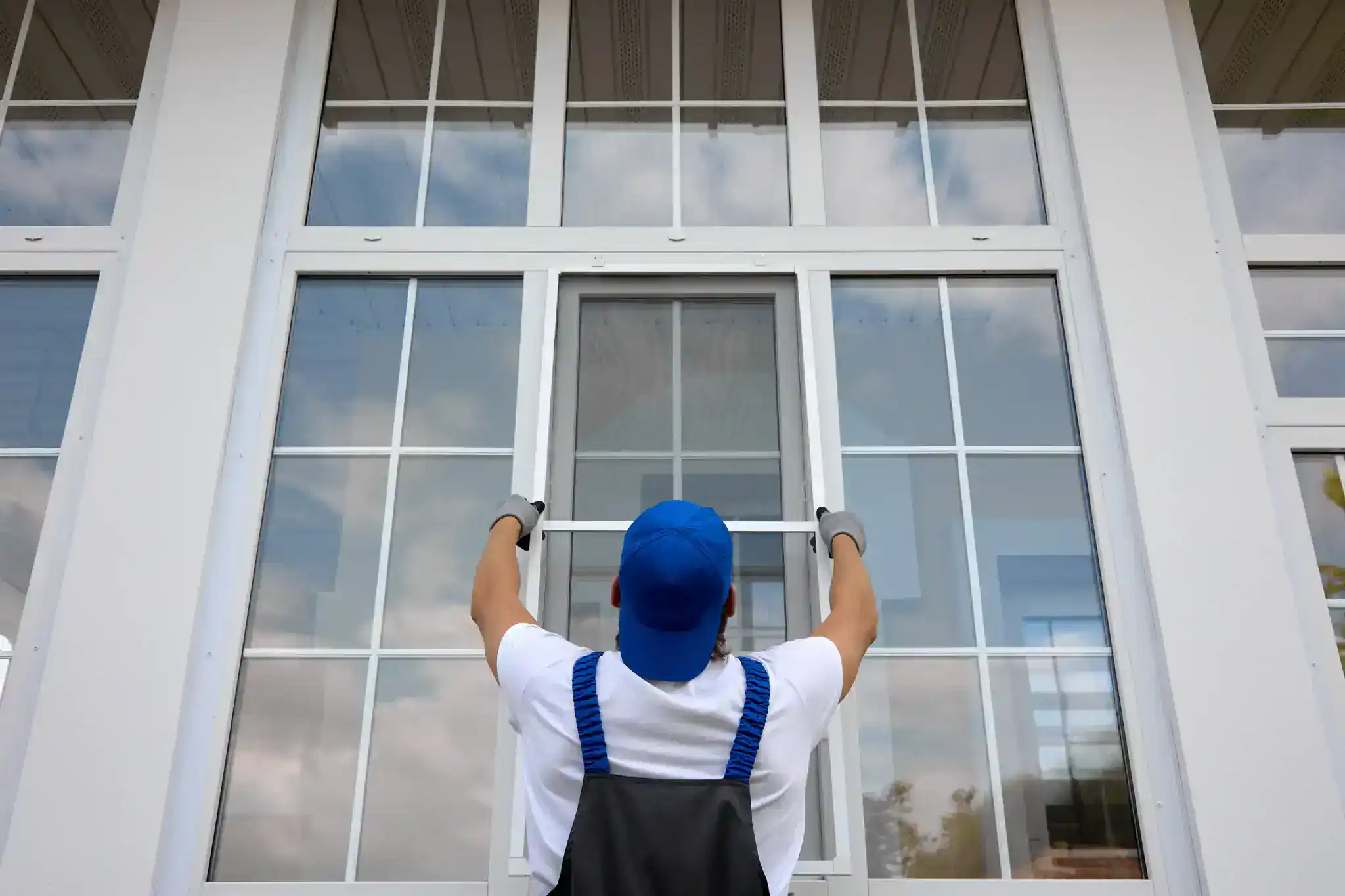
Then comes the work itself, and sequencing is everything. If you’re replacing windows and doing new siding in the same project, the windows come first. Once they’re set and flashed properly, the siding goes up around them, locking in a weathertight seal. Painting or coating is always the final step — applied after the surfaces are clean, primed, and fully prepared. Skipping surface prep is the single most common reason exterior paint fails within a year or two. It’s not the paint. It’s what happened — or didn’t happen — before the paint went on.
The final stage is a walkthrough. Every detail gets reviewed before we consider the job done. If something isn’t right, it gets fixed before we leave. That’s not a special promise — it’s just how the work should go.
San Diego County gets around 266 sunny days a year. That sounds like a selling point for living here, and it is — but it’s also relentless UV radiation beating down on your exterior surfaces every single day. Add coastal salt air in Encinitas and Oceanside, temperature swings that crack stucco in inland areas like Escondido and Temecula, and wildfire risk in communities like Alpine and Spring Valley, and you’ve got a climate that demands materials chosen specifically for this region — not whatever’s cheapest or most common on the East Coast.
For siding, fiber cement — particularly James Hardie — is what we recommend for most San Diego County homes. It resists rot, repels termites, holds paint longer than wood, and carries a Class A fire rating that matters in fire-prone zones. That last point isn’t a marketing detail for homeowners in Alpine or the hills above Escondido. It’s a real consideration. The Cedar Fire and Witch Creek Fire left their mark on this county, and building codes in high-hazard severity zones increasingly reflect that history.
For stucco, the key is understanding that cracks are inevitable in San Diego’s climate. Thermal expansion and contraction — hot days, cool nights — will stress any stucco system over time. The question isn’t whether it will crack; it’s whether the installation was done correctly enough to manage those cracks before they let water in. Proper expansion joints, correct mix ratios, and a finish coat applied over a fully cured base all make a significant difference in how long a stucco system holds up.
For windows, California’s Title 24 energy code sets specific requirements around U-factor and Solar Heat Gain Coefficient. Any permitted window replacement in San Diego County has to meet those standards. Beyond compliance, quality window replacement genuinely reduces energy bills — we’ve seen homeowners cut their heating and cooling costs by up to 30% after upgrading from original single-pane windows.
Want live answers?
Connect with a MRH Pro Construction & Painting expert for fast, friendly support.
The contractor you hire matters as much as the materials they use. San Diego County has no shortage of people willing to take your money for exterior work — but the gap between a qualified contractor and an unlicensed one can mean the difference between a project that lasts 20 years and one that fails in 18 months.
California’s Contractors State License Board makes it easy to verify any contractor’s license at cslb.ca.gov. If someone can’t give you a license number, or if the license doesn’t check out, that’s your answer. For exterior remodeling that spans multiple trades, you want someone holding at minimum a Class B General Building Contractor license. For painting specifically, a C-33 Painting and Decorating license requires four years of journeyman-level experience and passing two state exams. These aren’t just bureaucratic hoops — they’re a baseline for accountability.

The most common warning signs aren’t subtle once you know what to look for. A contractor who asks for 50% or more of the total cost before work begins is a red flag. A vague verbal estimate with no written scope of work is a red flag. High-pressure tactics designed to get you to sign before you’ve had time to think — also a red flag. And an estimate that seems dramatically lower than everyone else’s? That gap has to come from somewhere, and it usually comes from skipped permits, cheaper materials, or unlicensed labor.
One thing homeowners in Oceanside, Encinitas, and Chula Vista often don’t think to ask about is subcontracting. Many contractors — especially larger regional companies — win the job and then hand it off to subcontractors you’ve never met. You hired one company; strangers show up. That’s not inherently illegal, but it creates accountability gaps that tend to surface when something goes wrong.
We don’t use subcontractors. Our seven-person crew is in-house, and the same people who show up on day one are there through completion. That’s not a small thing. When something needs to be fixed or a decision needs to be made mid-project, there’s no chain of intermediaries — just a direct line to the people doing the work.
One of the questions we hear most often is whether everything needs to be done at once. The honest answer is: it depends. If your stucco, windows, and paint are all failing at the same time — which is common in San Diego County homes built between the 1960s and 1990s, now 30 to 60 years old — doing everything together is almost always more cost-effective than separate mobilizations. You avoid redundant setup costs, ensure correct sequencing, and protect each phase of the work with the next. But if only one system is failing and the rest is solid, we’ll tell you that. A contractor who always recommends the most expensive scope isn’t someone you should trust with your home.
Another common question: do I really need a permit for exterior work? For cosmetic painting, typically no. For siding replacement, structural carpentry, or window replacement in San Diego County communities like Escondido, Oceanside, Encinitas, Chula Vista, Temecula, Alpine, Spring Valley, and Bonita, often yes — and the answer varies by city and scope. Each municipality has its own building department with its own thresholds. Unpermitted work doesn’t just create headaches with inspectors; it can complicate your homeowner’s insurance and create serious problems when you sell. We pull every permit that’s required and manage the inspection process from start to finish.
Homeowners near Camp Pendleton in Oceanside frequently ask about our military discount. Yes, we offer 10% off for active duty military and veterans — and the same for seniors. It’s a straightforward discount, no hoops to jump through. We work with a lot of military families in North County, and it’s something we’re glad to offer.
One more question worth addressing: how long does exterior remodeling take? A focused siding replacement or stucco project on a single-family home typically runs one to two weeks. A more comprehensive exterior remodel — windows, siding, stucco, and paint together — can run three to four weeks depending on scope and weather. We give you a clear timeline before work starts and communicate throughout, so you’re never left wondering what’s happening or when it ends.
Exterior remodeling done right protects your home, improves its energy efficiency, and adds real value in one of the most competitive real estate markets in the country. Done wrong, it means doing it twice. The difference usually comes down to who you hire and whether they actually know this climate, these materials, and this process.
We’ve been doing this work in San Diego County for 16 years — not general construction, not interior remodeling, just exteriors. Siding, stucco, windows, painting, gutters, trim, and carpentry. Every project is handled by our in-house crew, permitted where required, and built to hold up against everything San Diego throws at it.
If you’re in Encinitas, Oceanside, Escondido, Chula Vista, Temecula, Spring Valley, Alpine, or Bonita and you’re ready to talk through what your home actually needs, reach out to us. We’ll give you a straight answer and a detailed estimate — no pressure, no surprises.
Article details:
Share:
Continue learning: