Not all exterior contractors are built the same. Here's what HOA boards and property managers in San Diego County need to know before signing anything.
Share:
Summary:
If you’re on an HOA board or managing a commercial property in San Diego County, you already know the pressure that comes with a major exterior project. You’re accountable to your neighbors, your residents, or your tenants. You’re managing community reserves or a capital budget. And you’ve probably heard at least one story about an HOA that hired the low bidder and spent the next two years dealing with the fallout.
This isn’t another article telling you to “choose wisely.” It’s a practical look at what you should expect from the process (from the first site walk to the final walkthrough) and what separates a contractor who can handle the full scope from one who can only handle part of it.
The word “painting” undersells what a real exterior restoration project involves. By the time we finish a quality project, we’ve likely handled cracked stucco, rotted trim, failed caulking around window frames, damaged siding sections, and corroded gutters, in addition to the repaint itself.
That distinction matters more than most boards realize when they’re collecting bids. A contractor who only holds a California C-33 Painting and Decorating license can legally apply coatings. But the moment they uncover dry rot behind a fascia board or a structural crack in the stucco shell, they’re outside their licensed scope. That’s when projects stall, second contractors get called in, and timelines fall apart.
We handle the complete exterior envelope (surface prep, structural repairs, coating application, and finish work) under one license, one contract, and one warranty. That’s the difference between a project that runs smoothly and one that creates headaches for months. For commercial properties, our commercial painting services provide a comprehensive approach to maintaining and improving the exterior.

California issues two licenses that are relevant here. The C-33 Painting and Decorating license covers coatings, surface preparation, and decorative finishes. The B General Building Contractor license covers framing, structural repair, and reconstruction. Most painting contractors hold only the C-33. That’s fine for a straightforward repaint on a well-maintained building. It’s a problem the moment any structural work enters the picture.
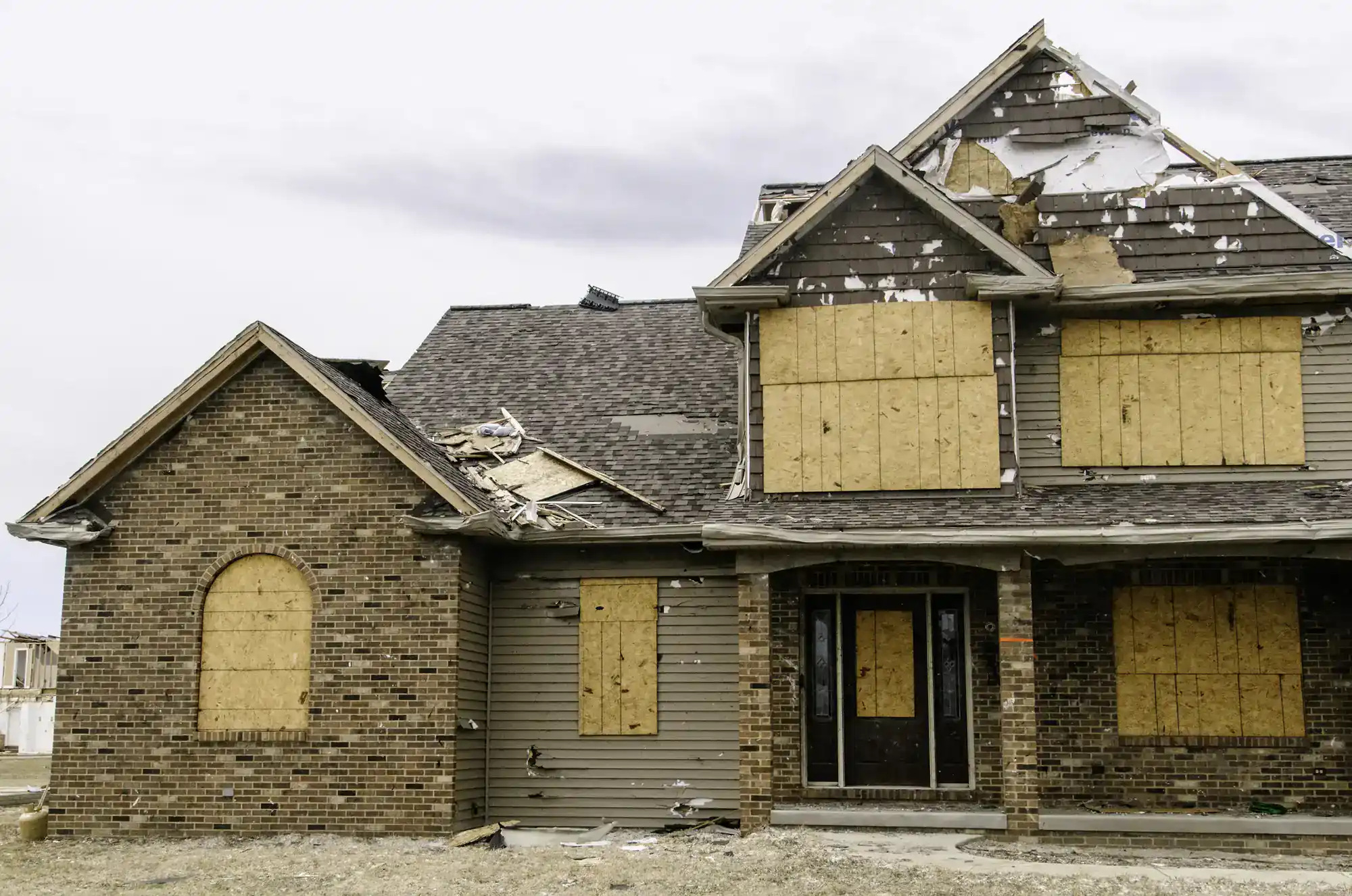
For HOA communities in San Diego County, structural surprises mid-project are not the exception: they’re closer to the rule. Stucco cracks around window penetrations, wood rot behind trim boards, siding sections that have been holding moisture for years, these things get discovered when a crew starts pulling back surfaces and doing proper prep work. If your contractor can only legally paint, not repair, you’re suddenly managing two separate contracts, two insurance certificates, and two crews on the same property at the same time.
We hold both a B General and a C-33 license, which means we can handle whatever the project surfaces (structurally and cosmetically) without stopping work, without calling in a subcontractor, and without handing you a change order that reads like a surprise.
California also requires a contractor’s license for any work valued at $1,000 or more in labor and materials. HOAs that unknowingly hire unlicensed workers, even through a licensed primary contractor who subcontracts without disclosure, can face real legal exposure under California Business and Professions Code. Verify the license number at cslb.ca.gov before signing anything. It takes about two minutes and is worth every second.
One of the most common reasons HOA bids vary wildly (sometimes by $20,000 or more on the same property) is that contractors aren’t specifying the same scope. One bid includes full surface washing, spot priming, and two finish coats. Another assumes the surfaces are clean and ready. One includes stucco crack repair. Another excludes it entirely. Without a written paint specification, you can’t compare bids accurately, and you won’t know which corners got cut until the project is already underway.
A legitimate proposal for an HOA or multi-family exterior project should spell out the exact preparation process: pressure washing, scraping, caulking, spot priming, and any structural repairs identified during the site walk. It should name the specific coating products being used, not just “premium exterior paint.” It should include application method, number of coats, and dry times between coats. And it should state warranty terms clearly: what’s covered, for how long, and what process exists if something fails.
The reason this matters so much in San Diego County specifically is that the climate isn’t uniform across the region. A coastal HOA in Encinitas or Pacific Beach is dealing with salt-air exposure that accelerates paint failure on standard acrylic coatings. An inland community in Escondido, Santee, or El Cajon faces more dramatic temperature swings that cause stucco to expand and contract, which means cracks around window frames and corners are an ongoing maintenance issue, not a one-time fix. The right coating system for one community isn’t necessarily the right system for the other, and a proposal that doesn’t account for where your property sits is leaving you exposed.
For HOA boards, the proposal is also a legal document. It becomes part of the project record, supports your reserve study documentation, and gives you something concrete to point to if the work doesn’t match what was promised. Never proceed without one.
Want live answers?
Connect with a MRH Pro Construction & Painting expert for fast, friendly support.
The logistics of a commercial painting or multi-family exterior remodeling project are genuinely different from a single-family repaint. You’re not just scheduling around one family’s routine: you’re coordinating around dozens of residents, shared parking areas, building access points, and community rules about noise and working hours.
A contractor who has only worked on individual homes will underestimate this. The scheduling has to be phased thoughtfully, communicated clearly to residents in advance, and flexible enough to handle the real-world friction that comes with working in an occupied community. That means someone on the crew needs to be a project manager, not just a painter. We staff every multi-family project with a dedicated site lead who handles resident communication, scheduling adjustments, and quality oversight, not a rotating cast of subcontractors.

San Diego County’s weather is genuinely favorable for exterior painting most of the year, but “most of the year” isn’t the same as “all of the time,” and the specific conditions vary enough across the county that scheduling and coating selection require real planning.
Coastal communities from Del Mar down through Chula Vista deal with the marine layer that settles in most mornings during June and July (what locals call June Gloom). Surfaces that look dry can hold enough moisture to prevent proper paint adhesion, which means morning start times on coastal projects often need to be pushed back until the layer burns off. A crew that doesn’t account for this ends up applying coatings to damp substrates, and that’s how you get bubbling, peeling, and early failure.
Inland communities in Escondido, Ramona, and the East County corridor face a different challenge: overnight temperatures that can dip below 50°F from mid-December through mid-February. Latex paint requires overnight lows above that threshold to cure properly. Push a project too late in the year in those areas and you’re either rushing the schedule or gambling on the weather. Neither is a good position for a board managing community reserves.
There’s also the matter of East County’s Wildland-Urban Interface zones. Communities in Alpine, Lakeside, Jamul, Valley Center, and parts of Poway sit in areas where fire-safety regulations can affect what exterior coatings are permissible on certain building elevations. Most general painting contractors aren’t familiar with WUI compliance requirements. If your HOA sits in one of these zones, it’s worth asking your contractor directly if they’ve worked in WUI-designated areas before.
Coating selection follows the same logic. Elastomeric coatings outperform standard acrylics in coastal salt-air environments because they flex with the substrate and resist moisture penetration more effectively. UV-resistant formulations matter more on south- and west-facing walls that take direct sun exposure throughout the day. These aren’t upsells; they’re the difference between a coating that holds for eight to ten years and one that starts showing wear in three.
A few questions come up consistently when HOA boards and property managers in San Diego County are evaluating contractors for a large exterior project. Here are honest answers to the ones that matter most.
How often should an HOA repaint its exterior?
The general industry cycle runs seven to ten years, depending on the coating system used, the building’s exposure to sun and salt air, and how well the previous project was executed. Communities in coastal San Diego County (particularly those within a mile of the water) may find themselves closer to the seven-year end of that range due to accelerated coating degradation from salt air. Inland communities in well-protected exposures may stretch closer to ten. A proper site walk can give you a more accurate read on where your specific buildings fall.
What’s the difference between a painting contractor and a restoration contractor?
A painting contractor applies coatings. A restoration contractor handles the full exterior envelope, which includes identifying and repairing structural issues before any coating goes on. For HOA communities, this distinction is significant because surface-level painting over unaddressed stucco cracks or damaged siding doesn’t fix the underlying problem. It just delays it, and usually makes it more expensive when it resurfaces.
Can an HOA legally hire an unlicensed contractor in California?
Technically, California law allows homeowners to hire unlicensed contractors for work under $1,000. For HOA projects, which almost always exceed that threshold, the answer is no, and the board members who approve the contract can face personal liability if something goes wrong. Always verify the license at cslb.ca.gov before signing.
How do we minimize disruption to residents during the project?
Phased scheduling, advance notice to residents, and a crew that shows up consistently and finishes what it starts. The single biggest source of resident complaints on HOA painting projects isn’t the noise or the inconvenience: it’s uncertainty. When residents don’t know what’s happening, when it’s going to be done, or who to call with a concern, frustration builds fast. A contractor with a clear communication plan and a dedicated crew makes a meaningful difference here.
How much does HOA exterior remodeling cost in San Diego County?
Comprehensive exterior remodeling projects in San Diego County typically range from $20,000 to $50,000 depending on the size of the property and the full scope of work involved. Per-unit painting costs on stucco condo communities vary significantly based on prep requirements, coating system, and structural repairs needed, which is exactly why a detailed, itemized proposal matters before you commit to anything.
The contractor you choose for an HOA or commercial exterior project is making decisions that affect every homeowner in your community and every dollar in your reserve fund. The right choice isn’t always the lowest bid. It’s the contractor who can handle the full scope legally, communicate clearly throughout the project, and stand behind the work when it’s done.
For San Diego County specifically, that means someone who understands the difference between coastal and inland coating systems, knows how to schedule around the marine layer, and won’t stop work mid-project because they discovered something outside their licensed scope.
We hold both a B General and C-33 license, use an in-house crew with no subcontractors, and have been doing this kind of work in San Diego County for 16 years. If you’re evaluating contractors for an HOA painting and restoration project or a commercial exterior renovation anywhere in the region, reach out directly to talk through your project: no pressure, just a straightforward conversation about what the work involves.
Article details:
Share:
Continue learning: