Adding onto your home in San Diego is a bigger process than most people expect. Here's what actually happens — and who's responsible for what.
Share:
Summary:
Most homeowners start researching home extensions thinking the hard part is deciding what to build. Then they start talking to contractors and realize the process is a lot more involved than they expected — permits, inspections, material choices, sequencing, and a dozen decisions they didn’t know they’d have to make. If you’re somewhere in that research phase right now, this page is for you. We’ll walk through what home extension contractors actually do, how the process works in San Diego County specifically, and what you should know before you sign anything.
The short answer: a lot more than most people assume. A house extension contractor isn’t just someone who swings a hammer. We’re responsible for coordinating the entire project — pulling permits, managing sequencing, sourcing materials, passing inspections, and making sure the finished addition looks and performs like it was always part of the home.
In California, that work legally requires a Class B General Building Contractor license. This isn’t a formality — it’s the license specifically designed for multi-trade projects like home additions, and it requires at least four years of journeyman-level experience before you can even sit for the exam. If a contractor can’t show you a valid CSLB license number, that’s a problem worth taking seriously.

The process starts before anyone picks up a tool. An experienced general contractor San Diego begins by evaluating your property, understanding how the addition integrates with the existing structure, and planning every stage of the project before construction begins. We walk your property, assess how the addition connects to the existing structure, and ask questions about how you plan to use the space. That first conversation shapes everything downstream — the design, the permit application, the material selections, and the timeline.
Once plans are drawn and submitted, the permit process begins. In San Diego County, this step alone can take weeks depending on your jurisdiction. If you’re in the City of San Diego, you’re working with the Development Services Department. If you’re in Carlsbad, Encinitas, Chula Vista, or an unincorporated part of the county, you’re dealing with a different office with its own requirements and timelines. San Diego saw a 16% increase in home remodeling permits in 2025 — which means those offices are busier than ever. We know how to navigate that system, which saves you weeks of back-and-forth with permit offices.
After permits are approved, the structural work begins — foundation prep, framing, rough-in for any utilities. This phase gets inspected before it’s closed up, which is why doing it right the first time matters. Failed inspections cost time, and time on a construction project costs money.
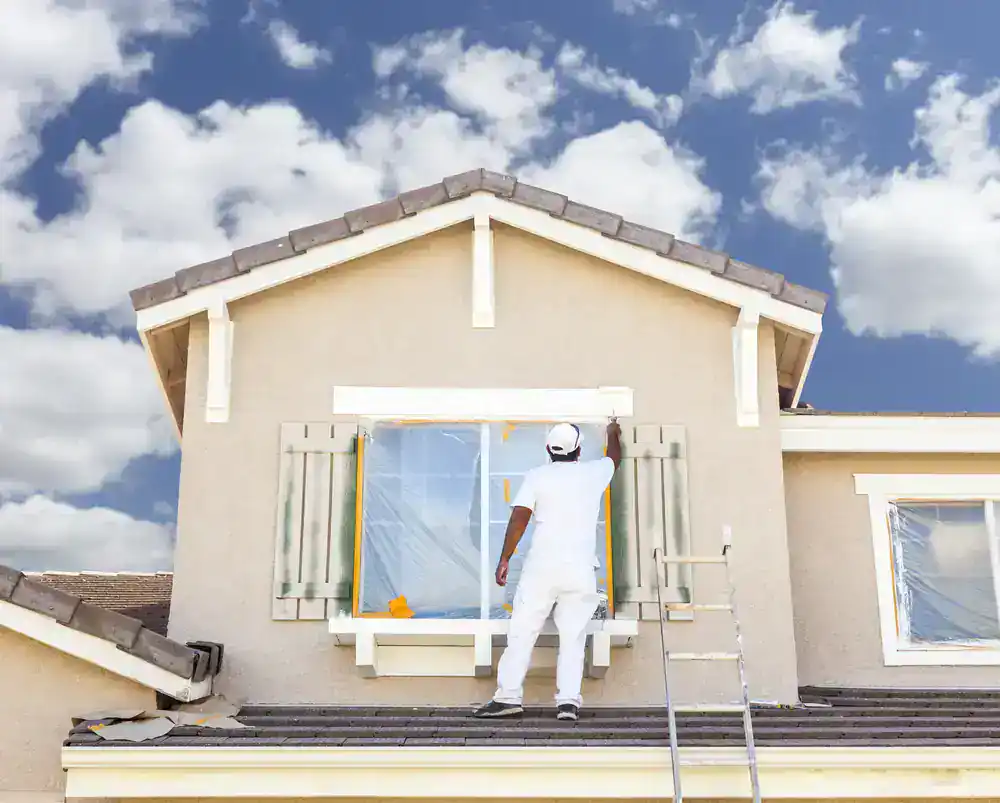
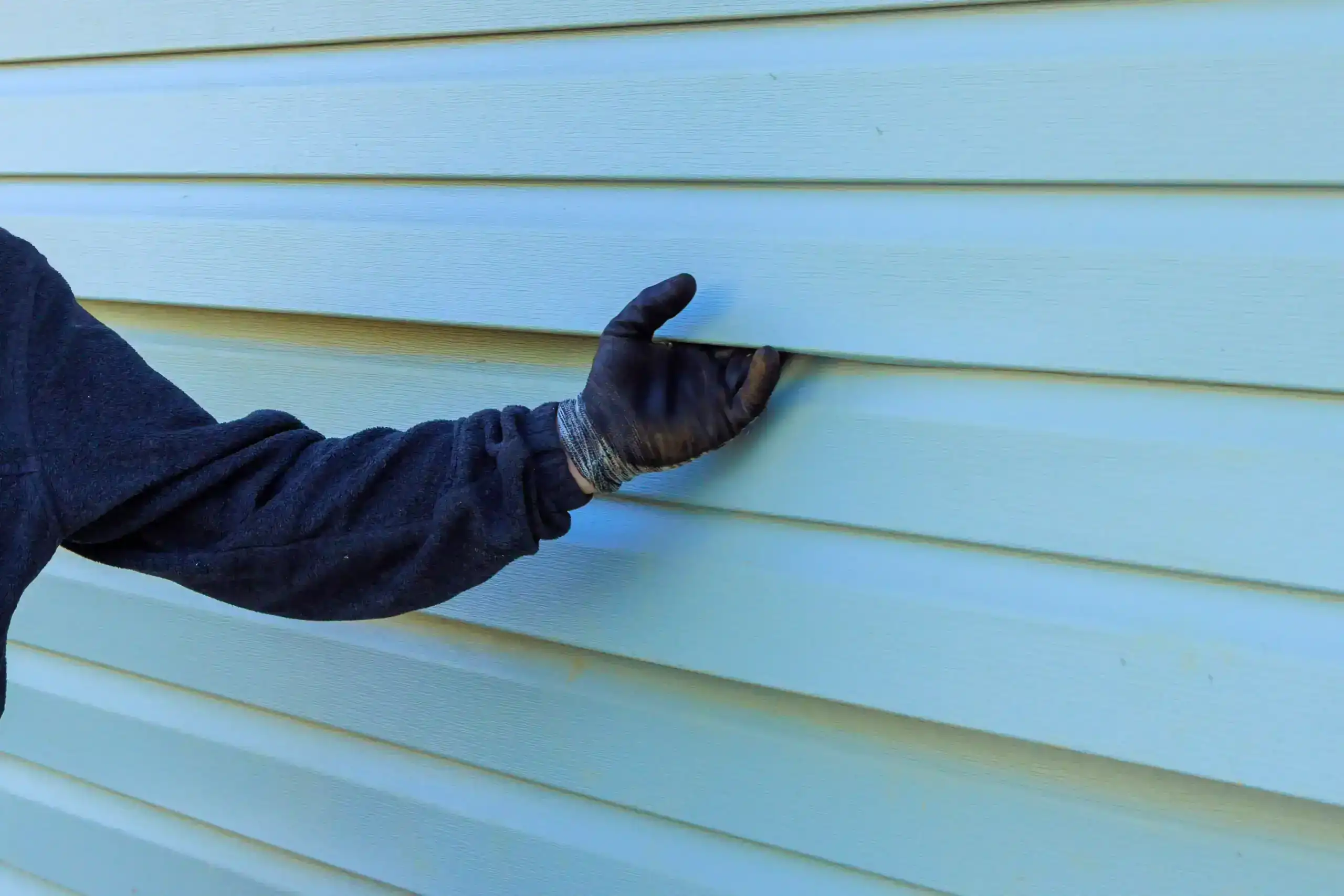
Then comes the phase that most people don’t think about until they see a bad example of it: the exterior finishing. The siding, stucco, windows, and paint are what determine whether your addition looks like it belongs on your house or looks like it was bolted on after the fact. In San Diego, where the overwhelming majority of homes are stucco-finished, matching the texture and color of the existing exterior is a craft in itself. Get it wrong and the addition announces itself every time someone looks at your house. Get it right and nobody notices — which is exactly the goal.
This is where our exterior remodeling experience pays off in a way that general construction experience doesn’t automatically cover. We know which fiber cement products hold up against San Diego’s coastal UV and salt air, how to flash and seal windows so they integrate cleanly with stucco, how to prep surfaces for a paint job that won’t fade or crack after one summer. These are details that come from years of working specifically in this climate, not just years in construction generally.
The contracting industry has a well-earned reputation for horror stories, and home additions are where a lot of them happen. The most common version goes like this: a homeowner hires a general contractor, work begins, and then they realize the people actually doing the work are subcontractors the homeowner never met, never vetted, and who have no direct accountability to anyone on the project. Sequencing falls apart. Materials show up late. The contractor becomes hard to reach. The project drags on.
There are a few specific things worth watching for before you commit. A contractor who asks for more than a third of the total project cost upfront is a red flag — standard practice is around 15% down. A contractor who suggests skipping the permit is a bigger red flag. Unpermitted additions create legal complications when you sell, can void your homeowner’s insurance, and may require demolition to fix. If someone tells you a structural addition doesn’t need a permit, walk away.
Vague quotes are another warning sign. If the estimate doesn’t break down what’s included — specifically whether permit fees are covered — you’re likely to see surprise charges later. Permit fees in San Diego County for larger projects can run into the thousands, and some contractors leave them out of the initial number intentionally.
The flip side of all this is that a good contractor makes the process feel manageable. We explain what’s happening and why. We give you a realistic timeline and stick to it. We handle the permit process so you don’t have to figure out which city office to call. And when the job is done, we follow up to make sure it was done right — not just done.
Want live answers?
Connect with a MRH Pro Construction & Painting expert for fast, friendly support.
Choosing the right general contractor comes down to a few things that are easy to verify and a few things you can only gauge through conversation. Start with the verifiable ones. Confirm their CSLB license number at cslb.ca.gov — it takes two minutes and tells you whether the license is active, what classification it covers, and whether there are any complaints on file. For a home addition, you want a Class B General Building Contractor.
From there, look at how we communicate. Do we respond promptly? Do we explain things clearly without making you feel like you’re asking dumb questions? A contractor who’s impatient during the sales process will be worse once the job starts.
Before you commit to any home addition company, there are a handful of things a qualified contractor should be able to answer without hesitation. What’s included in the quote — specifically, are permit fees covered? Who will actually be doing the work — our own employees or subcontractors? What’s the realistic timeline for a project of your scope? And what happens if something unexpected comes up mid-project?
These aren’t trick questions. They’re the basic information you need to make a sound decision, and a contractor who fumbles them or gets vague is telling you something important.
The subcontractor question is worth pressing on. Many home addition companies in San Diego use subcontractors for some or all of the work — which isn’t automatically a problem, but it does mean the person you hired isn’t the person doing the job. When subcontractors are poorly scheduled or not properly managed, projects stall. Materials don’t arrive when they’re supposed to. The sequencing breaks down. And the homeowner ends up stuck in the middle of a dispute they never signed up for.
Working with a contractor who uses their own direct crew changes that dynamic entirely. The same people who show up on day one are the people finishing the job. Accountability is direct, not filtered through a chain of subcontracts. And because the crew isn’t splitting time across three other jobs, your project actually moves at the pace it was quoted.
For a home addition in San Diego, that also means working with people who understand the specific materials and conditions here. Coastal properties from Coronado to Encinitas face salt air and marine layer moisture that accelerates paint failure and corrosion on the wrong materials. Inland communities like Escondido, El Cajon, and Santee deal with more extreme heat and UV. And a significant portion of San Diego County — East County, parts of North County, and some coastal-adjacent areas — falls within High or Very High Fire Hazard Severity Zones, where fire-resistant exterior materials aren’t just smart, they may be required by code.
Knowing which materials perform in which conditions, and having the experience to install them correctly, is what turns a structurally sound addition into one that actually holds up over time.
Cost is usually the first question and the one that’s hardest to answer without a site visit. Nationally, most home additions run somewhere between $22,000 and $83,000, with the average landing around $51,000. In San Diego, where labor costs and permit fees are higher than the national average, you should expect to be at the higher end of that range for anything beyond a basic bump-out.
Per square foot, standard room additions typically run $80 to $200. More complex additions — anything involving a kitchen, a bathroom, or a second story — can push $250 to $750 per square foot or more. San Diego ADU permit fees alone ranged from $6,500 to $21,000 in 2025 depending on the size and scope of the project, which is why permit costs need to be in your estimate from the start, not revealed as a line item at the end.
The ROI question is worth thinking through carefully. Home additions in San Diego generally return somewhere between 20% and 70% of the project cost in added home value, depending on the type of addition and the quality of the finish. Bathroom additions and garage conversions tend to perform best. Second story additions can increase property value by as much as 65%. But ROI is heavily influenced by execution — a well-finished addition that integrates seamlessly with the existing home performs better at resale than one that looks like an afterthought.
San Diego’s housing market context matters here too. With median home prices in many neighborhoods exceeding $800,000 to $900,000, the math on adding space often makes more sense than selling and buying up. If you’re sitting on equity and need more room, an addition can be a more practical move than entering one of the most competitive real estate markets in the country. That’s true whether you’re in a coastal community like Del Mar or Solana Beach, or further inland in Escondido or Chula Vista.
One more thing worth knowing: San Diego’s mild climate means there’s no bad time of year to start a project. There’s no winter freeze that shuts down exterior work, no spring mud season, no reason to wait. A project that starts in November finishes on whatever timeline the scope actually requires.
The process of adding onto your home is more involved than most people expect going in — but it’s a lot less stressful when you’re working with a contractor who’s done it before, knows the local permit landscape, and shows up with the same crew from start to finish.
The things that matter most aren’t hard to evaluate. Verify the license. Ask who’s actually doing the work. Make sure permit costs are in the estimate. And pay attention to how the contractor communicates before you’ve signed anything — that’s usually a preview of how they’ll communicate once the job starts.
If you’re in San Diego County and looking for a contractor who handles the exterior side of home additions — siding, stucco, windows, painting, and the finishing work that makes everything look like it belonged there all along — we’ve been doing exactly that kind of work in this county for 16 years. Reach out and we’ll give you a straight answer on what your project involves.
Article details:
Share:
Continue learning: